


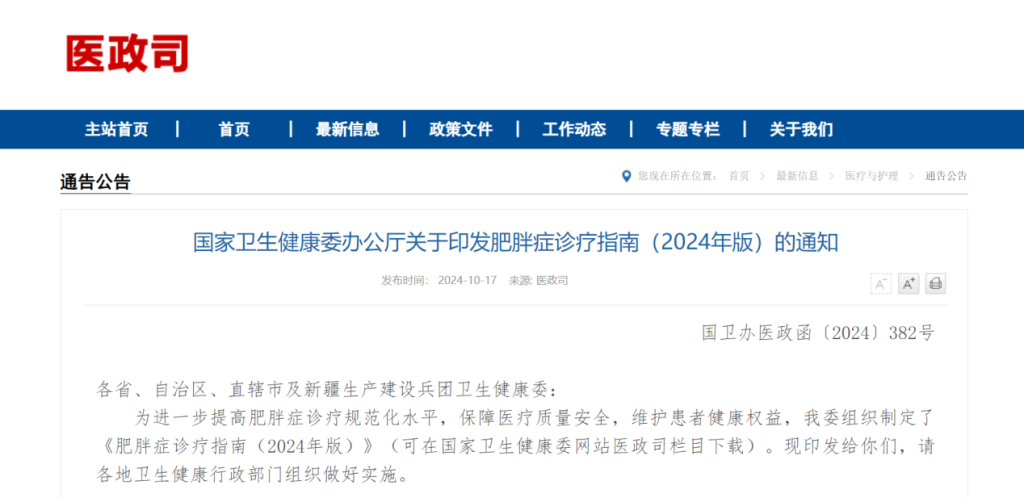
According to the Report on Nutrition and Chronic Disease Status of Chinese Residents (2020), 34.3% of Chinese adults are overweight and 16.4% are obese. Among children and adolescents, overweight and obesity rates are 11.1% and 7.9% respectively. Obesity not only reduces quality of life but is also closely linked to chronic conditions such as type 2 diabetes and cardiovascular disease.
The Guidelines for the Diagnosis and Treatment of Obesity (2024 edition) reflect the latest advances in obesity management, updating diagnostic standards beyond the single BMI index to more refined classifications tailored to different treatment needs. The new categories are:
Regardless of underlying conditions or risk factors, the guidelines provide evidence-based therapeutic strategies corresponding to each classification.
The 2024 Guidelines highlight a diverse range of treatment approaches, including behavioural and psychological interventions, exercise, clinical nutrition therapy, pharmacotherapy, bariatric surgery, and traditional Chinese medicine. Physicians are advised to perform comprehensive evaluations, identifying causes, classifications, staging, and related conditions before working with patients to design personalised treatment plans.

For pharmacological treatment, the guidelines stress the importance of standardised medication use, specifying indications and dosing requirements. Overweight patients with at least one obesity-related comorbidity (such as hyperglycaemia, hypertension, or cardiovascular disease) who fail to meet weight-loss goals through lifestyle interventions may consider anti-obesity drugs as an adjunct. Currently, five medications are approved in China: orlistat, liraglutide, benaglutide, semaglutide, and tirzepatide.
Under the latest regulations of the National Medical Products Administration, patients with a BMI of 24 or above qualify for pharmacotherapy. The guidelines emphasise strict adherence to indications and standardised administration. Before initiating treatment, physicians must assess patient-specific conditions and contraindications. Continuous follow-up is required to monitor efficacy and safety, with timely adjustments to therapy as needed.
Low-field nuclear magnetic resonance (LF-NMR) plays a vital role in the pharmacological management of obesity, particularly in evaluating drug efficacy. In pharmacodynamic studies using obese animal models, LF-NMR can assess therapies for related conditions such as hypertension, diabetes, and fatty liver disease. By establishing specific disease models, its body composition analysis capabilities allow precise evaluation of drug performance. The technology enables rapid, non-invasive measurement of body fat and lean mass in conscious small animals and supports both short- and long-term monitoring of fat changes in the same subject. These strengths provide valuable scientific data for clinical research and drug development in obesity.
 Scan QR Code
 Scan QR Code
 Phone Support
Phone: 400-060-3233
After-sales: 400-060-3233
 WeChat Support

 Official Account

Back to Top