


Liposomes are tiny bilayer vesicles resembling biological membranes, formed by natural or synthetic phospholipids in aqueous solutions. They can be used for gene transfer or drug delivery. By fusing with cell membranes, liposomes carry drugs into cells. Since their discovery in 1965, research has expanded widely. Beyond their role as vectors for genes and drugs, liposomes have been applied to deliver dyes into textiles, pesticides into plants, enzymes and nutrients into food, and cosmetic actives into skin. Their applications now span life sciences, membrane engineering, food, cosmetics, and more.
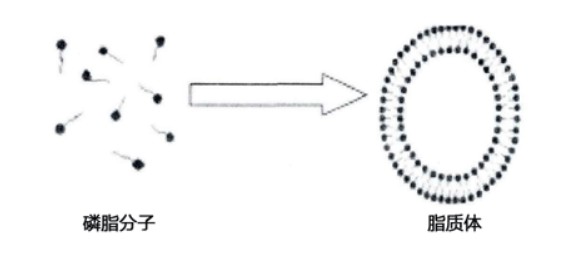
Encapsulation efficiency is a key quality attribute of liposomes. It refers to the percentage of drug entrapped within the bilayer relative to the total drug added, reflecting the degree of drug encapsulation and guiding improvements in preparation processes.
It is a critical indicator for evaluating the manufacturing process and quality of liposomal formulations. High encapsulation efficiency enhances therapeutic index, reduces toxicity, minimises side effects, and lowers required dosages compared to conventional formulations.
Conventional techniques include centrifugation, Sephadex gel filtration, microcolumn centrifugation, dialysis/retro-dialysis, protamine aggregation, and fluorescence assays. The method used depends on the drug encapsulated and the membrane composition. These processes often require tracers, centrifugation, and multiple handling steps. They are labour-intensive, costly, and may damage liposomes during processing. Moreover, because such methods rely on particle size and density differences, they often underestimate actual encapsulation efficiency.
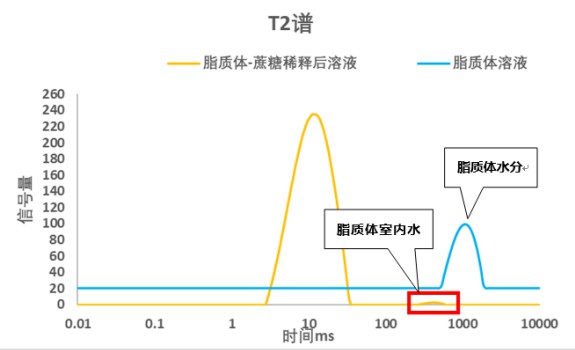
Low-field NMR detects the properties of water protons within liposomes, enabling rapid determination of encapsulated volumes and encapsulation efficiency—overcoming the limitations of conventional methods.

NMR signal intensity is directly proportional to the amount of hydrogen protons in water. A calibration curve can be established between water content and signal intensity. By measuring the total water content of liposomal preparations and then the signal differences, the intravesicular water volume can be calculated, leading to accurate encapsulation efficiency values.
 Scan QR Code
 Scan QR Code
 Phone Support
Phone: 400-060-3233
After-sales: 400-060-3233
 WeChat Support

 Official Account

Back to Top