


Magnetic field homogeneity is critical for NMR imaging. This article provides a brief introduction to shimming methods for benchtop NMR systems.
Magnetic field homogeneity refers to the uniformity of the magnetic field within a defined volume—specifically, whether the number of field lines passing through a unit area is consistent. In NMR systems, homogeneity is expressed as a deviation per million (ppm) of the main magnetic field. The frequency deviation depends on field strength. For example, in a 1.0 T system, 1 ppm corresponds to a ~42 Hz frequency shift for protons.
The uniformity of the main field directly affects tissue T2 relaxation times. Poor homogeneity shortens T2, leading to faster relaxation and a shorter free induction decay (FID) tail. Improved homogeneity lengthens T2, resulting in slower relaxation and a longer FID tail. In theory, under perfect homogeneity, T2* equals T2, and the FID decays according to the tissue’s intrinsic relaxation.
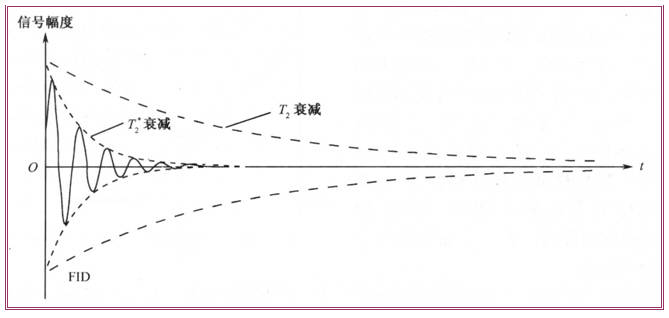
In benchtop NMR systems, field homogeneity is adjusted by observing the decay of the FID signal on screen. By tuning the parallel alignment of the magnet poles, homogeneity can be improved: a longer FID tail and slower decay envelope indicate higher homogeneity.
For permanent-magnet MRI instruments, homogeneity depends on pole parallelism. Adjusting pole alignment improves homogeneity, but this alone is insufficient for imaging requirements. Additional shimming methods are needed, mainly passive and active shimming.
Passive shimming uses small magnetic plates or shims attached to inner or outer pole surfaces. These adjust local field lines to improve uniformity. In this experiment, pole uniformity was adequate, so passive shimming was not used. The small magnetic plates in the photo illustrate passive shimming.
Active shimming uses current-carrying coils to generate small corrective magnetic fields. By applying calibrated currents to coils oriented in different directions, local field inhomogeneities are corrected.
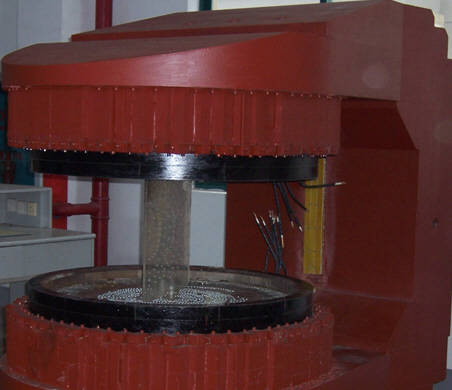
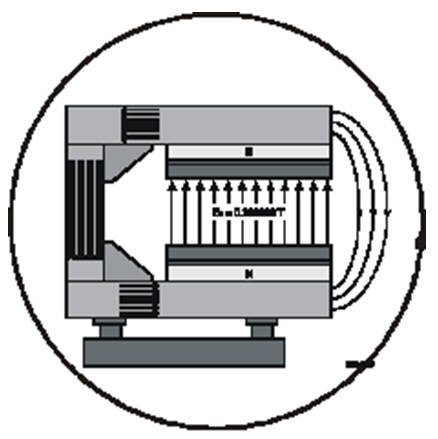
Photographs of permanent-magnet shimming
Reference: Experimental Tutorial on MRI Technology (Wang Hongzhi, Zhang Xuelong, Wu Jie)
 Scan QR Code
 Scan QR Code
 Phone Support
Phone: 400-060-3233
After-sales: 400-060-3233
 WeChat Support

 Official Account

Back to Top