


Concrete structures are often significantly impacted by forces and environmental factors during their service life, with axial pressure and environmental humidity being the two most common factors. However, the water migration behavior of hardened cement paste (HCP) with different water contents under axial pressure remains poorly understood. This study introduces a novel axial pressure-controlled hydrogen nuclear magnetic resonance (1H NMR) system to in situ monitor the strain and water distribution of HCP with different water contents under varying stress levels. The results show that reducing water content decreases the C-S-H interlayer spacing, thereby increasing the densification of the C-S-H gel and enhancing the mechanical properties of cement-based materials. The critical point of C-S-H layer sliding occurs when the average interlayer spacing is 1.89 nm. Under axial compressive loading, the C-S-H gel is compressed, causing some gel pores to rearrange into interlayer pores. As a result, the interlayer water content increases while the gel water content decreases. As the stress level increases, the interlayer water content gradually increases, reaching a maximum value when the stress level equals or exceeds the critical stress. At this point, the water migration behavior transitions from fully reversible to partially reversible. These findings provide valuable insights into the coupled effects of mechanical loading and water migration in HCP, which is crucial for predicting the long-term performance and durability of concrete structures under various environmental conditions.
Water, as a critical component of cement-based materials (CBM), plays a significant role in the internal distribution and migration within the pore spaces, which influences the performance of CBM. Based on the types of pores within hardened cement paste (HCP), water in cement-based materials can be classified into C-S-H interlayer water, gel water, small capillary water, and large capillary water, as shown in Table 1. C-S-H interlayer water and gel water both exist in the nano-scale C-S-H gel and are crucial for determining the microstructure of the C-S-H gel. The loss of gel and interlayer water during the drying process reduces the C-S-H interlayer spacing, causing gel pores to convert into interlayer pores. When HCP is re-wetted after drying, interlayer pores are restored to gel pores. Moreover, the C-S-H interlayer spacing influences the creep behavior of HCP. A decrease in the water content within C-S-H increases the difficulty of C-S-H rearrangement, resulting in a higher creep modulus for HCP. However, due to changes in the internal distribution of water during creep, water migration between capillary pores and C-S-H will cause changes in the water content inside the C-S-H gel. Therefore, investigating the real-time changes in the water distribution within HCP during creep and recovery processes will help reveal the volume deformation mechanism of HCP. Previous studies on water migration have been limited by traditional methods and could not monitor water migration in cement-based materials under compressive loading in real time. 1H NMR technology, which measures the water content and distribution in CBM based on the relaxation properties of protons in water molecules, offers a novel method to quantify water migration and redistribution. This technique allows continuous, non-destructive testing of the same sample, providing an effective tool for studying water migration during loading. In this study, 1H NMR technology was employed to investigate the water balance process of HCP under different relative humidity (RH) environments and evaluate the mechanical properties after equilibrium was achieved. Additionally, a 1H NMR system with axial pressure control was designed to monitor the strain and water distribution changes of HCP in situ during loading at different stress levels. The water migration mechanisms for different types of pore water were clarified, and their effects on the mechanical properties of HCP were analyzed, providing theoretical insights into the deformation mechanisms of CBM.
Table 1. Classification and Pore Size of Internal Pores in Hardened Cement Paste

A white cement paste with a water-to-cement ratio of 0.5 was prepared. To shorten the hydration period and avoid the influence of subsequent hydration on the experimental results, the sample was cured in hot water for 2 days after demolding and then cured for 28 days under standard conditions. Preparation of HCP with different water contents: (1) Fully saturated sample: The sample was saturated using a vacuum pressurized water-saturation device (pressure of 8 MPa, saturation time of 12 hours). (2) Partially saturated sample: After drying for 21 days under different humidity conditions, the sample’s mass remained almost unchanged, indicating that the internal water content had reached equilibrium with the environmental humidity, completing the preparation of samples with different water contents.
The detailed 1H NMR testing and loading steps are as follows:
(1) Measure the “empty” coil, and the measurement result will be used as the baseline for data inversion to subtract the “background noise” effect.
(2) Place the HCP in the holder, and after the coil stabilizes at a constant temperature, apply a 4.25 MPa confining pressure.
(3) Perform the 1H NMR test on the sample in its initial state.
(4) Load the HCP according to the loading pattern shown in Figure 2, and maintain constant pressure once the specified load is reached, followed by a 1H NMR test. Each 1H NMR test takes approximately 200 seconds. After the test is complete, immediately unload and perform the 1H NMR test again while maintaining the unloaded state.
(5) After completing the tests, continue loading and repeat step (4) until the sample fails.
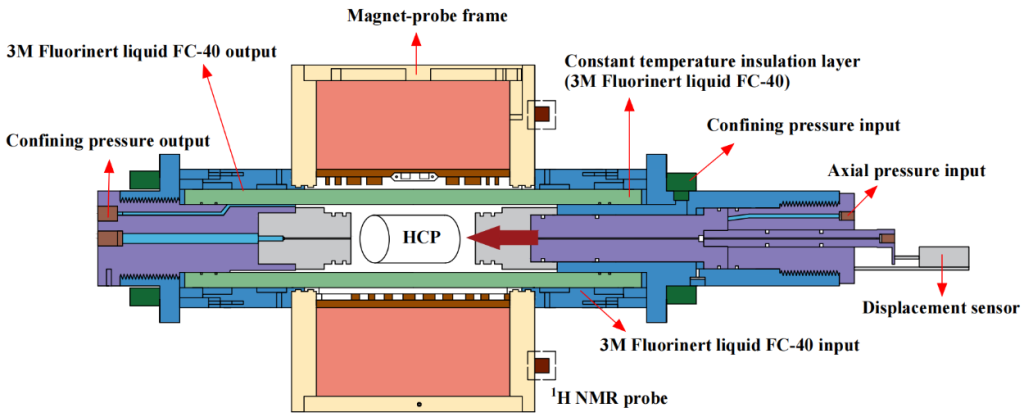
Figure 1. Internal Structure of the Holder

Figure 2. Experimental Loading Scheme
As RH decreases, the gel water content significantly decreases, while the interlayer water content first increases and then decreases. This is primarily due to the loss of gel water, which reduces the C-S-H interlayer spacing, and the gel pores convert to interlayer pores. After reaching equilibrium at 85% RH, HCP still contains 16.45% gel water and 42.04% interlayer water. After reaching equilibrium at 59% RH, the gel water content in HCP is only 1.99%, and the interlayer water content reaches 41.61%. As RH decreases further, the interlayer water content begins to decrease, and at 11% RH equilibrium, the interlayer water content in HCP is only 30.73%.
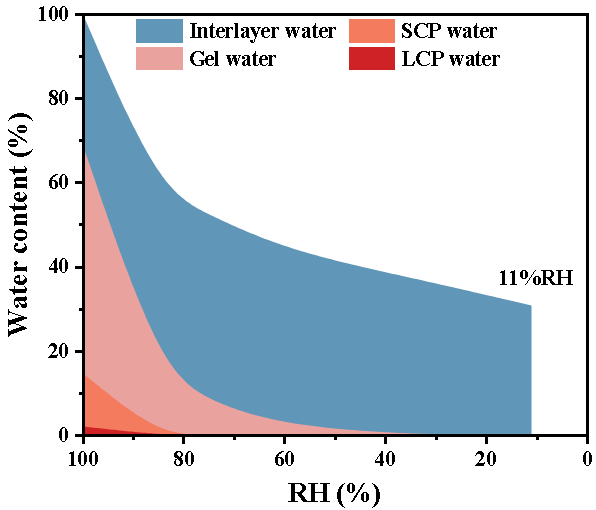
Figure 3. Changes in Pore Water Content of Samples under Different Humidity Environments at Equilibrium
 Scan QR Code
 Scan QR Code
 Phone Support
Phone: 400-060-3233
After-sales: 400-060-3233
 WeChat Support

 Official Account

Back to Top