


With the rapid progress of nanotechnology, bio-functionalised superparamagnetic nanoparticles—conjugated with biomolecules such as nucleic acids, small molecules, peptides, or antibodies—have been widely applied in bio-enrichment and molecular recognition. When magnetic beads bind to biomacromolecules, they alter the system’s transverse relaxation time (T2). Low-field NMR can sensitively detect such T2 changes. Combining the two enables the creation of innovative biomolecular detection methods with ultra-low detection limits, high specificity, and rapid turnaround. This technology is already being used for detecting toxins, viruses, bacteria, heavy metals, and pathogenic microorganisms.
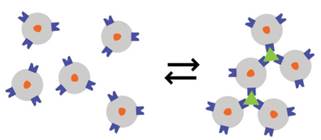
The fundamental principle of magnetic nanosensors is based on the ability of selective nanoparticles to switch between dispersed and aggregated states when interacting with targets. These state transitions lead to measurable changes in the spin–spin relaxation time (T2) of water protons in solution. By monitoring ΔT2, molecular targets including nucleic acids (DNA, mRNA), proteins, and viruses can be sensitively detected.
1. Viruses
2. Small molecules, peptides
3. Nucleic acids (DNA and mRNA)
4. Bacteria and foodborne pathogens
5. Immunoglobulins
6. Toxins
7. Heavy metals
Probe coil diameter: 15 mm
Sample volume: 0.5–2 ml
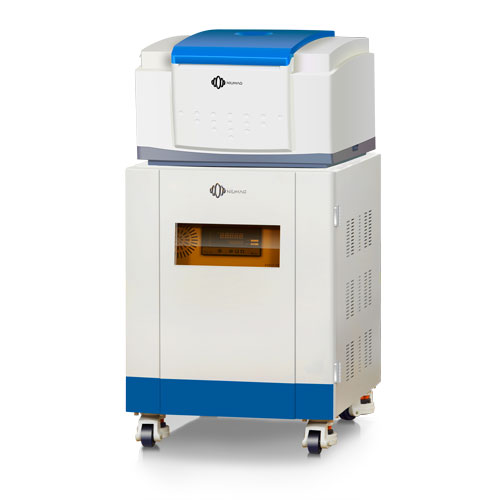
Benchtop NMR – Magnetic Nanosensor Rapid Detection System
Reference: Rapid Screening of Foodborne Pathogens Using Low-Field Magnetic Resonance. Journal of Chinese Institute of Food Science and Technology 13, no. 03 (2013): 171–75.
 Scan QR Code
 Scan QR Code
 Phone Support
Phone: 400-060-3233
After-sales: 400-060-3233
 WeChat Support

 Official Account

Back to Top