


With the advancement of nanotechnology, bio-functionalised superparamagnetic nanoparticles—conjugated with biomolecules such as nucleic acids, small molecules, peptides, and antibodies—have been widely applied in bio-enrichment and recognition. When bio-functionalised magnetic beads bind to biomacromolecules, they induce changes in the transverse relaxation time (T2) of the system. Low-field nuclear magnetic resonance (LF-NMR) can sensitively detect these changes. By combining both, a novel biomolecular recognition method has been developed—characterised by ultra-low detection limits, high specificity, and rapid performance. Today, benchtop NMR systems coupled with magnetic nanoswitches are already used for detecting toxins, viruses, and bacteria.
Benchtop NMR–Magnetic Nanosensor Rapid Detection: Fundamental Principle
The core principle of magnetic nanosensors is based on the ability of selective nanoparticles to switch between dispersed and aggregated states upon interaction with targets. These state transitions cause measurable changes in the spin–spin relaxation time (T2) of water protons in solution. A benchtop NMR system can sensitively capture these changes, enabling rapid detection of targets.
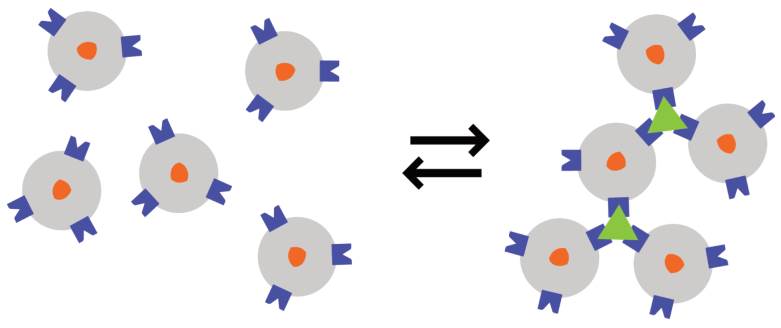
Benchtop NMR–Magnetic Nanosensor Rapid Detection: Case Study for Bacterial Detection
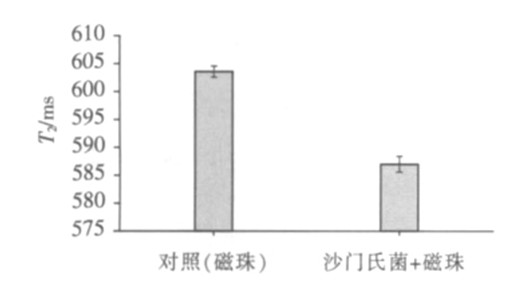
The figure below shows the T2 values detected by benchtop NMR for control samples (magnetic beads only) versus samples containing Salmonella (magnetic beads + Salmonella). The observed differences demonstrate that this method can effectively detect target microorganisms.
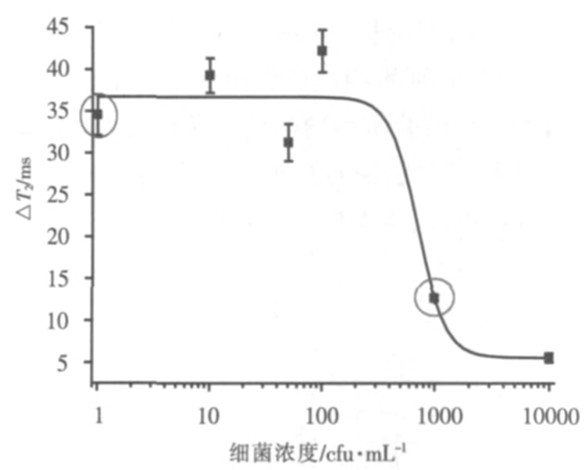
To evaluate the influence of bacterial concentration and sensitivity of the detection method, six concentrations of Salmonella were tested, with magnetic bead concentration fixed at 0.14 mg/mL. Results are shown below: when bacterial concentration increased from 100 cfu/mL to 10,000 cfu/mL, the ΔT2 value decreased from 43 to 5. Even when Enterobacter sakazakii concentration was as low as 1 cfu/mL, ΔT2 remained high (34 ms), confirming that the method can detect target bacteria at very low concentrations and highlighting the high sensitivity of benchtop NMR detection.
By combining benchtop LF-NMR with nanosensors, target bacteria in samples can be detected rapidly. Owing to the immunological specificity of binding, this method offers extremely high sensitivity and selectivity. Furthermore, it requires only simple and widely available reagents and can be applied even to opaque and complex food matrices.
Analyte categories detectable with Benchtop NMR–Magnetic Nanosensor Technology:
1. Viruses [46]
2. Small molecules, peptides [23, 63, 65]
3. DNA, mRNA [1, 45, 46, 66, 67]
4. Peroxidases [48]
5. Proteases [45, 47, 68]
6. Telomerase [66]
7. Methyltransferases [46]
8. Hormones [69, 70]
9. Ions [60, 71, 72]
10. Bacterial cells [23, 48]
11. Proteins [23, 45, 49, 61, 69]
12. Immunoglobulins [19]
13. Eukaryotic cells [23]
Open for collaboration…
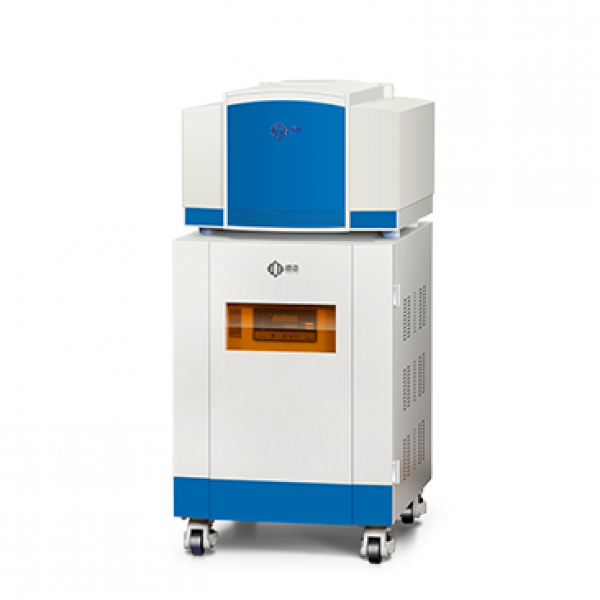
Recommended instrument: MRI Contrast Agent Imaging Analyser
[Reference: [1] Li Xianfu, Chen Yan, Zhang Zhiyun, et al. Rapid screening of foodborne pathogens using low-field magnetic resonance. Journal of Chinese Institute of Food Science and Technology, 2013(03): 171–175.]
 Scan QR Code
 Scan QR Code
 Phone Support
Phone: 400-060-3233
After-sales: 400-060-3233
 WeChat Support

 Official Account

Back to Top