



HTPB coatings are viscoelastic polymers primarily used for bonding and stress buffering, with additional functions such as thermal insulation and flame retardancy. Most coatings used in solid rocket motors today are formed by thermal curing of HTPB and isocyanate crosslinkers. During long-term storage, stress caused by thermal cycling, transport, rapid ignition, and flight acceleration can degrade the coating’s structural integrity and mechanical performance. As one of the most critical components in solid rocket motors, deterioration of HTPB coatings can directly lead to combustion failure, overloading, or even explosion of solid propellants—posing major safety and economic risks.
The microstructure of polymer materials plays a decisive role in their macroscopic mechanical performance and becomes especially complex under stress. However, direct experimental evidence of microstructural evolution during loading is limited. The mechanism behind performance variation under strain remains elusive. To address this gap, this study leverages low-field nuclear magnetic resonance (LF-NMR) to investigate the influence of strain on HTPB coatings by evaluating transverse relaxation behavior, crosslinking density, and microscopic structure under different strain levels.
This work utilized the VTMR20-010V-T low-field NMR system from Niumag Instruments. Using the CPMG pulse sequence, transverse relaxation decay curves were obtained for HTPB coatings at four fixed strain levels: 0%, 5%, 10%, and 15% (with samples clamped and stretched accordingly). The transverse decay was divided into fast and slow components, and crosslinking density was calculated via the XLD method. This enabled structural interpretation of the relaxation responses under different strain conditions.
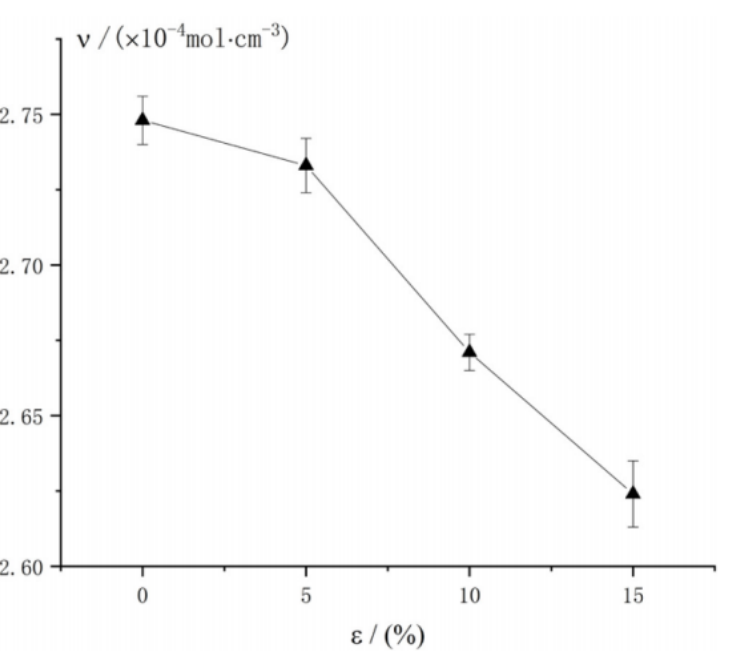
Figure 1: Crosslink density values at 0%, 5%, 10%, and 15% strain levels
As shown in Figure 1, the crosslink density of the HTPB coating decreases with increasing strain. This is mainly due to the unfolding and reorientation of polymer chains under stress, which reduces entanglement and increases chain spacing. The number of available alignment directions increases along the direction of applied force. Additionally, high strain may induce physical damage to the polymer network, further contributing to reduced crosslink density.
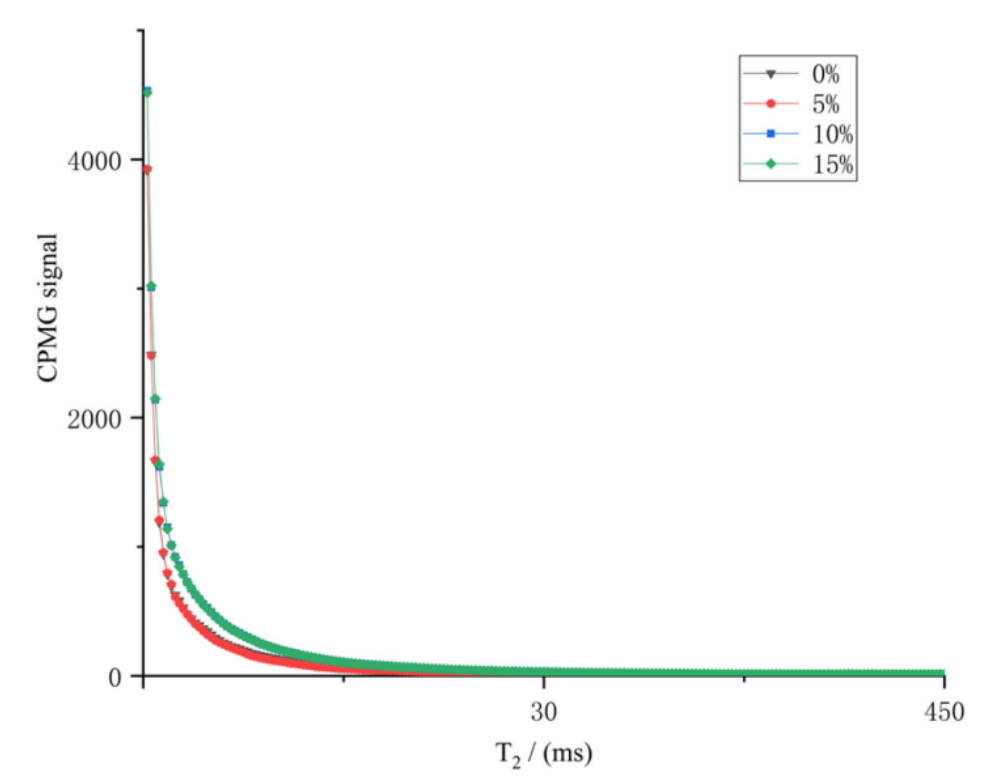
Figure 2: T2 relaxation curves under different strain conditions
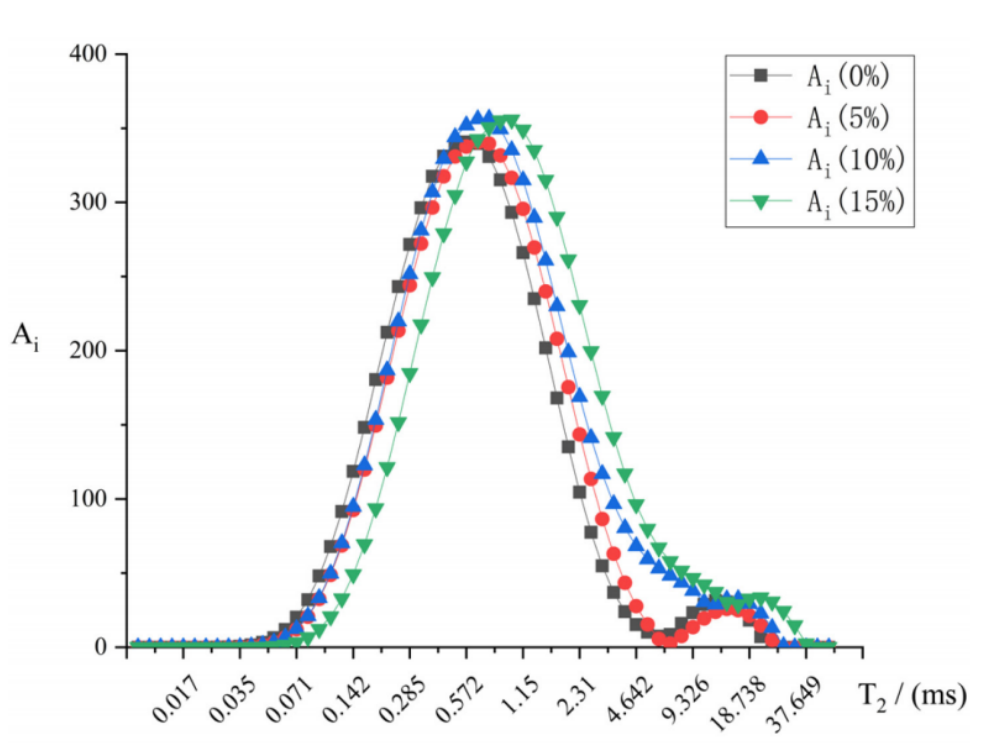
Figure 3: T2 relaxation inversion curves under different strain levels
Figure 2 displays the transverse decay curves under varying strain. As strain increases, the decay slope becomes gentler, indicating a decrease in crosslink density—consistent with Figure 1. However, the decay curve provides only a qualitative trend. To quantify the relaxation characteristics, inversion processing was applied to generate the T2 distributions shown in Figure 3. As strain increases, the curves shift to the right. The fast-relaxing T2 component increases from 0.572 ms to 1.000 ms, the slow component from 12.328 ms to 21.544 ms, and the total peak area increases from 5889.298 to 6615.835. This behavior can be attributed to strain-induced expansion of chain spacing, chain reorientation, and greater freedom for alignment, which in turn slows down transverse relaxation decay.
This study introduces a novel application of low-field NMR for exploring strain-dependent structural changes in HTPB coatings. It provides a new framework for researchers seeking to characterize materials under dynamic conditions.
If you’re interested in this application, feel free to contact us: 15618820062
[1] Du, Y. Q, Zheng, J, Zhi, J. Z, Zhang, X. Influence of Strain on the Microstructure and Transverse Relaxation Characteristics of HTPB Coating Using Low-Field 1H NMR Spectroscopy. Materials Science Forum, 2019, 956, 117–124.
 Scan QR Code
 Scan QR Code
 Phone Support
Phone: 400-060-3233
After-sales: 400-060-3233
 WeChat Support

 Official Account

Back to Top