


Coal resources have long been the foundational driving force behind China’s industrial and socioeconomic development. However, their large-scale extraction and use have brought a series of environmental issues. These include the widespread discharge of solid waste, environmental pollution, and geological disasters such as mining-induced earthquakes, aquifer depletion, and surface subsidence. Although various technologies for tailings treatment and backfilling of mining areas exist, how to effectively provide an integrated solution remains a hot research topic [1].
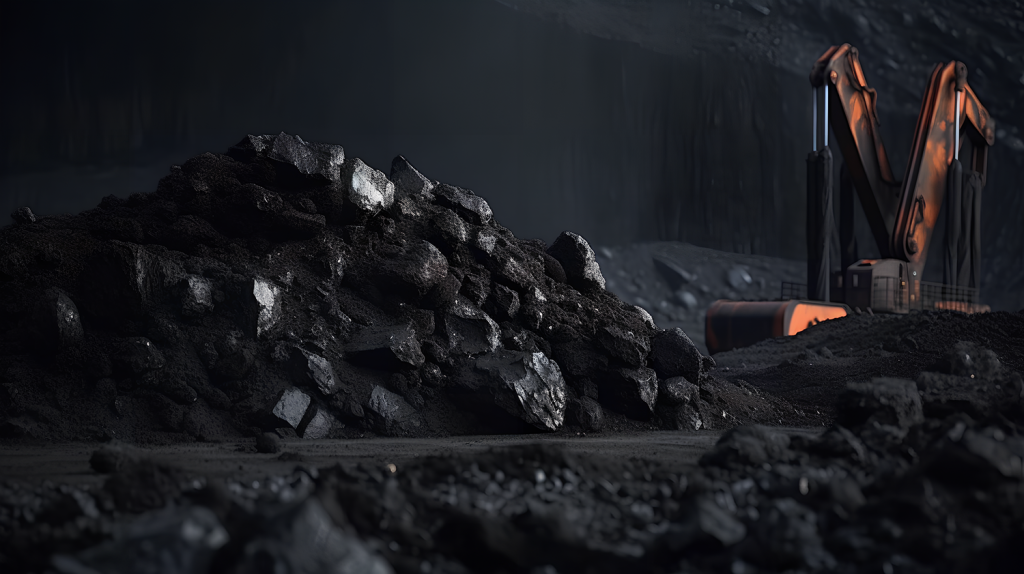
Direct tailings backfill into mining zones can alleviate some geological hazards, but such backfill often lacks adequate support strength compared to the original rock formations. To address this, tailings are fluidised into a slurry for injection into mined-out areas. This slurry, due to its mobility, can permeate fractures in the rock, harden, and thereby enhance structural support, reducing the risks of seismic shocks and collapses. Moreover, its low permeability allows it to retain groundwater, preventing moisture loss and helping combat surface desertification.
Low-field nuclear magnetic resonance (NMR) is a powerful tool for investigating microstructural changes in rock samples. It allows for precise quantification of porosity variations and fluid transport behaviour within rock through relaxation spectra, while NMR imaging provides spatial distribution of pores and fluids [2].
In this study, low-field NMR was used to monitor the seepage of grout into porous sandstone under various temperature and pressure conditions. The evolution of NMR parameters was analysed quantitatively to investigate fluid migration under different conditions.
First, grouting materials were selected and preheated in water baths at different temperatures (φ = 20°C, 40°C, 60°C, 80°C).
Then, the viscosity and hydration process of the materials were measured using a rotational viscometer and NMR equipment at each temperature.
Next, dry sandstone samples containing single artificial fractures were placed into core holders. A confining pressure of 20 MPa and the corresponding temperatures (φ = 20°C, 40°C, 60°C, and 80°C) were applied and maintained for 30 minutes to simulate deep underground conditions.
Finally, slurry was injected at constant pressures (0.5 MPa, 1.0 MPa, 1.3 MPa), and NMR T2 measurements were taken every 15 seconds to track porosity changes.
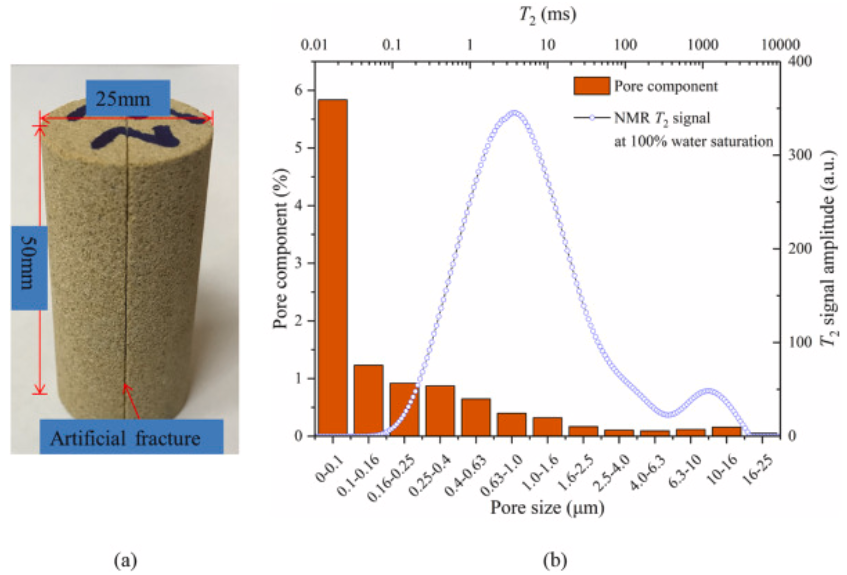
Figure 1: Artificially fractured core
Figure 1 shows the original rock sample, an artificially induced fracture for slurry injection, and the pore size distribution derived from NMR measurements.
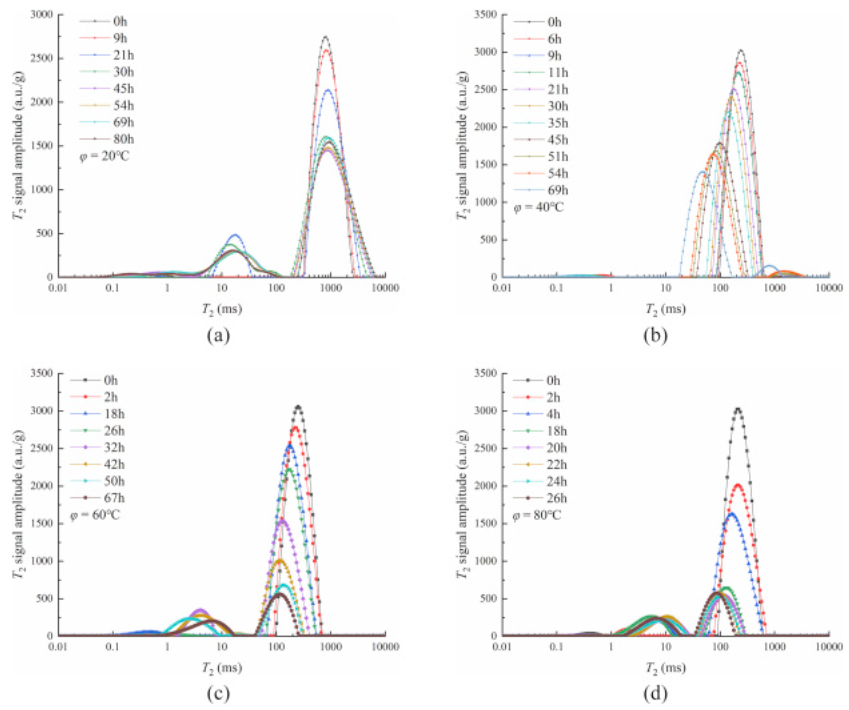
Figure 2: T2 distributions under different temperatures
From Figure 2: The area under the T2 spectrum decreases more rapidly at higher temperatures, indicating that permeability decreases with increasing temperature. Furthermore, grout hydration occurs faster at temperatures above 40°C.
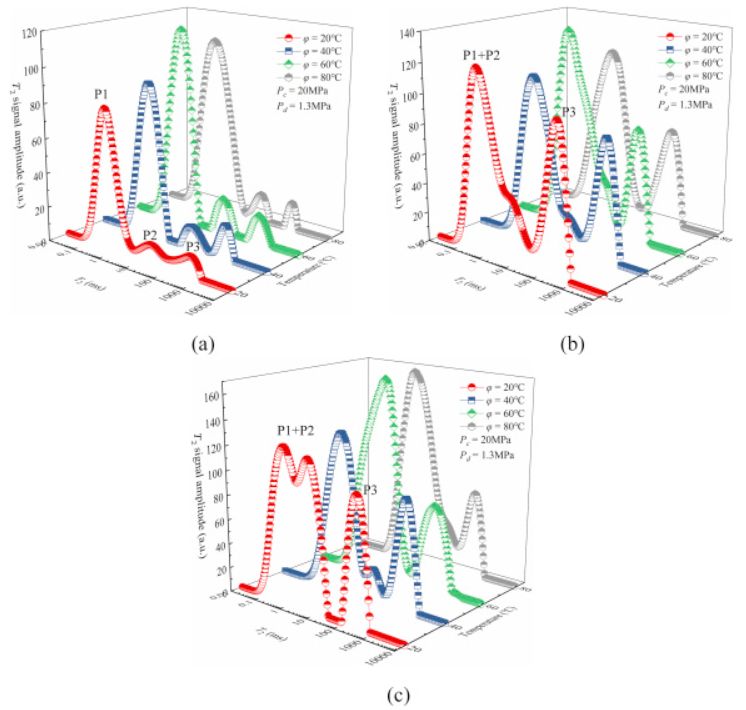
Figure 3: T2 distributions at different injection pressures
Initially, the relaxation distribution under different temperatures shows three peaks (Figure 3a). As grouting continues, T2 evolves (Figures 3b and 3c). As injection time increases from t = 30s to 60s, the second peak merges with the first, resulting in a bimodal distribution. The new first peak (P1+P2) and second peak (P3) are now in the ranges of 0.1 ms–100 ms and 100 ms–1000 ms, respectively. With increased injection time, both new peaks (P1+P2 and P3) grow, showing that grout penetrates micro- and macro-pores and fractures simultaneously. Moreover, as temperature increases from 20°C to 80°C, the area under P3 at t = 30s decreases, indicating reduced grout mobility in fractures at higher temperatures. In Figure 3c, as time increases from t = 30s to 60s, P3 remains largely unchanged while P1+P2 increases significantly, suggesting that at this stage, grout mainly moves into smaller pores rather than fractures.
For more insights, see reference [3].
If you’re interested in the above application, feel free to contact us at: 15618820062
[1] Asadizadeh M, Hedayat A, Tunstall L, et al. The impact of slag on the process of geopolymerization and the mechanical performance of mine-tailings-based alkali-activated lightweight aggregates. Construction & Building Materials, 2024(Jan.12):411.
[2] Guo F, Xie Z, Zhang N, et al. Study on the pore-throat structure characterization and nano grouting law of the low-permeability mudstone based on NMR-RSM methods. Construction and Building Materials, 2022.
[3] Wu Z, Yuan Z, Weng L, et al. Seepage characteristics of chemical grout flow in porous sandstone with a fracture under different temperature conditions: An NMR-based experimental investigation. International Journal of Rock Mechanics and Mining Sciences, 2021, 142(10):104764.
 Scan QR Code
 Scan QR Code
 Phone Support
Phone: 400-060-3233
After-sales: 400-060-3233
 WeChat Support

 Official Account

Back to Top