

Low-field nuclear magnetic resonance (LF-NMR) provides a non-invasive way to investigate the internal structure of materials and offers insights into molecular motion and interactions. For strain-stiffening, self-healing smart soft materials—such as ionic skins—their remarkable properties are often closely linked to their microphase-separated structures. When subjected to external forces, these materials exhibit strain hardening, meaning their stiffness or modulus increases with strain, improving resistance to deformation. At the same time, they possess self-healing capability—recovering their original state once the force is removed. These behaviors are often governed by microphase-separated domains within the material.
LF-NMR can be used to study changes in the microphase-separated structures of smart soft materials like ionic skins during the deformation process. In recent years, the research team led by Professors Peiyi Wu and Shengtong Sun at Donghua University has focused on designing mechanically tunable smart soft materials through viscoelastic network engineering and phase-structure control strategies.
Examples include strain-stiffening, self-healing ionic skins developed through multiscale network design (Nat. Commun. 2021, 12, 4082; Nat. Commun. 2022, 13, 4411); entropy-driven thermally stiffening hydrogels based on reversible physical adsorption (Angew. Chem. Int. Ed. 2022, 61, e202204960); high-damping ionic skins developed via dynamic viscous assembly of phase-separated fluorinated copolymers (Adv. Mater. 2023, 35, 2209581); peel-induced hardening and self-adhesive ionic liquid gels designed via strain-rate-induced phase separation (Adv. Mater. 2023, 35, 2310576); and adaptive ionic skins in a near-critical gel state across an ultra-wide frequency range via hierarchical hydrogen bonding and dynamic phase separation (Nat. Commun. 2024, 15, 885).
More recently, the team proposed a new strategy to design supramolecular polymer materials with enhanced impact-hardening performance using high-entropy-penalized physical interactions. They demonstrated that supramolecular polymer networks based on transient physical crosslinking are highly responsive to strain rates, making them excellent candidates for impact-stiffening materials. Based on this principle, they designed a system composed of polythioctic acid and arginine, forming guanidinium–carboxylate salt bridge hydrogen bonds under high entropy penalty. The microphase-separated structure and impact-hardening behavior of the system were thoroughly characterized using SAXS, time–temperature superposition rheology, relaxation time spectrum analysis, TEM, low-field NMR spectroscopy, and 2D correlation infrared spectroscopy. As a control, substituting arginine with lysine or histidine—both of which form only low-entropy, monodentate hydrogen bonds—resulted in a marked decline in impact hardening performance.
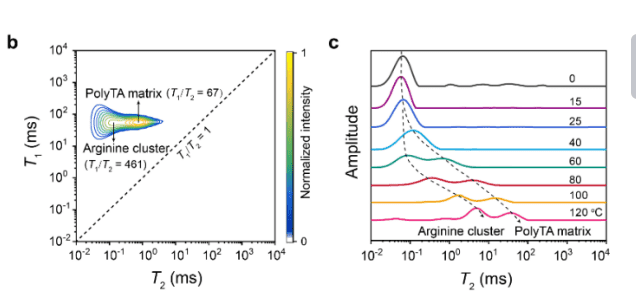
Figure 1. Characterization of impact-hardening mechanism (LF-NMR spectrum)
Macroscopically, these supramolecular polymers behave as classic non-Newtonian fluids—slowly flowing when undisturbed, yet turning rigid and elastic upon sudden impact. This clearly demonstrates their ability to “remain soft under light touch, but turn strong under force.”
 Scan QR Code
 Scan QR Code
 Phone Support
Phone: 400-060-3233
After-sales: 400-060-3233
 WeChat Support

 Official Account

Back to Top