


Low-field nuclear magnetic resonance (benchtop NMR) technology was used to investigate the effects of curing temperature and internal curing agent (SAP) on the microscopic pore structure of CaO-based shrinkage-compensating cementitious materials. Results indicate that for samples cured at 20°C, 40°C, and 60°C, the pore size distribution and porosity follow the trend: 40°C < 20°C < 60°C. The incorporation of SAP increased pore size and porosity within the first 3 days; however, by day 7, both metrics were lower than in samples without SAP.
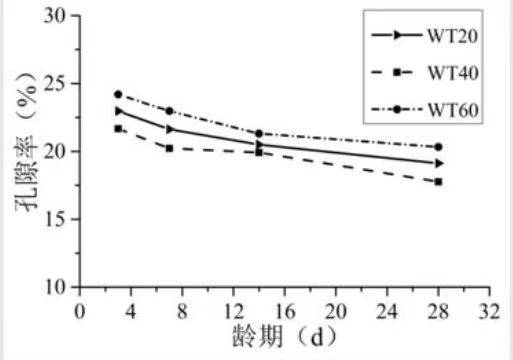
Figure 1. Porosity of CaO-based shrinkage-compensating cement paste under different curing temperatures
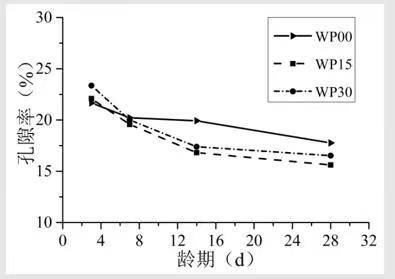
Figure 2. Porosity of CaO-based shrinkage-compensating cement paste with varying SAP content
Figure 1 illustrates the change in porosity of CaO-based shrinkage-compensating cement paste over time under different curing temperatures. The results show that samples cured at 40°C exhibited the lowest porosity, followed by 20°C, with the highest porosity observed under 60°C curing conditions.
Figure 2 depicts the porosity development of CaO-based shrinkage-compensating cement pastes with varying amounts of SAP. Prior to day 3, SAP-incorporated samples had higher porosity compared to those without SAP. However, after day 7, porosity decreased more rapidly in SAP-containing samples and ultimately dropped below that of the non-SAP group.
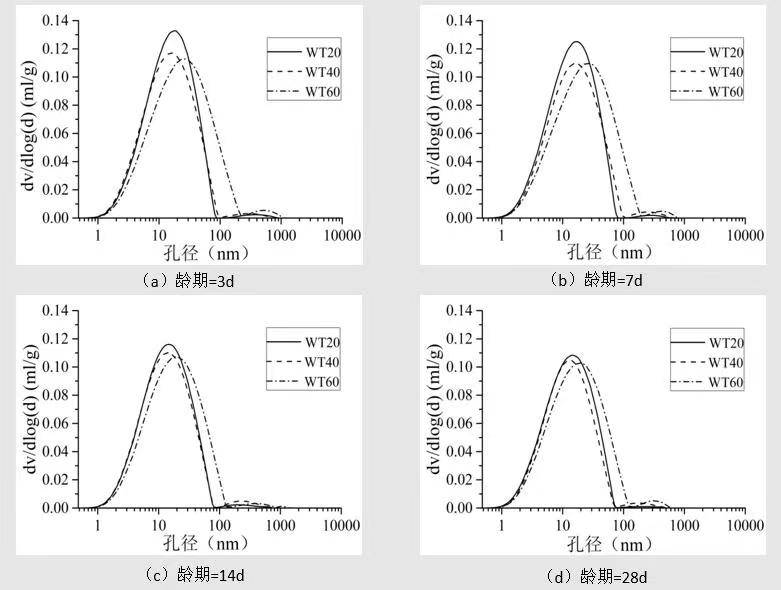
Figure 3. Pore size distribution over time for CaO-based cement pastes under different curing temperatures
Under sealed curing at 60°C, the main and secondary peak pore sizes of CaO-based shrinkage-compensating cement paste were larger than those under 20°C and 40°C. Among all, 40°C curing yielded the smallest main pore size and secondary peak value.
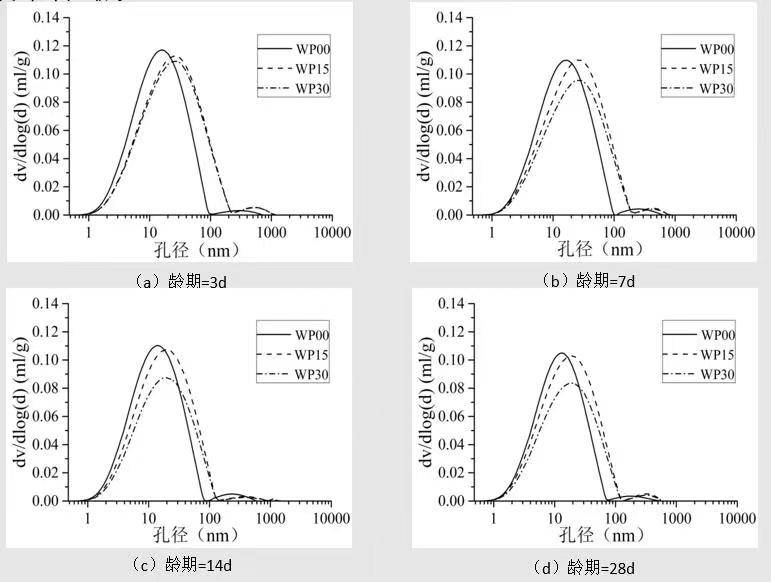
Figure 4. Pore size distribution over time for CaO-based cement pastes with varying SAP contents
During the initial 3 days, increasing SAP content led to larger gel pore sizes and more gel pores overall. By day 7, pore size reduced more rapidly with higher SAP dosage, eventually becoming smaller than that of mixes without SAP. As for capillary pores, the secondary peak increased with higher SAP content.
Elevated curing temperatures accelerated early hydration of the paste. For CaO-based shrinkage-compensating pastes, the relationship of pore size distribution and porosity under 20°C, 40°C, and 60°C curing was: 40°C < 20°C < 60°C.
The saturated SAP increased the actual water-to-cement ratio of the paste. Within the first 3 days, both pore size and porosity were greater than in SAP-free pastes. By day 7, as self-desiccation became more evident, SAP began to release stored water, enabling further hydration of unreacted cement particles. The resulting hydration products helped refine the pore structure and reduce porosity.
Nuomai NMR Application Contest Entry: Hohai University, Di Yunfei
NMR-Based Study on the Early-Stage Microporous Structure of CaO-Based Shrinkage-Compensating Cementitious Materials
Instrument used:
Medium-sized NMR imaging analyzer MesoMR23-060H-I
 Scan QR Code
 Scan QR Code
 Phone Support
Phone: 400-060-3233
After-sales: 400-060-3233
 WeChat Support

 Official Account

Back to Top