


Tire cord fabric is a structural fabric used in tires, woven with high-strength yarns as warp and medium-to-fine single yarns as weft. The warp yarns are densely arranged while the weft yarns are sparsely distributed, giving the fabric a curtain-like appearance—hence the name “tire cord fabric.” It acts as a reinforcement structure in rubber products such as tires, enabling them to withstand high pressure, impact, and intense vibration. Tire cord fabric is a critical material that directly affects the performance and service life of tires.
The main feature of tire cord fabric lies in its construction: thick, densely packed warp yarns and thin, sparsely spaced weft yarns. It is typically woven using a plain weave pattern, where the warp bears the majority of the product’s mechanical load. The weft only serves to connect the warp yarns and maintain uniform spacing, ensuring the structural integrity of the fabric.
In the physical property metrics of tire cord fabric, strength unevenness, elongation unevenness at break, and rubber pick-up (RPU) are considered secondary indicators. However, if two of these three fail to meet standards, the product is downgraded. This means that even if primary indicators meet specifications, failure in secondary indicators like RPU can still result in product devaluation—a critical issue often overlooked. As dipped tire cord fabric is a high-tech, high-value-added product, inaccurate testing or quality downgrading leads to significant financial loss. While strength and elongation variation are difficult to remedy in the dipping process, maintaining a stable and consistent rubber pick-up rate becomes vital for ensuring product quality and economic efficiency.
Standardized methods related to rubber pick-up in tire cord fabric include: GB/T 30310-2013 – Test Method for Rubber Pick-Up of Chemical Fiber Cord, Yarn, and Ropes; GB/T 36020-2018 – Test Method for Dipped Tire Cord Made of Chemical Fibers.
In NMR, when low-energy atomic nuclei absorb electromagnetic radiation, they undergo spin-level transitions, which include a change in spin orientation. In the presence of a magnetic field, this absorption at a specific frequency—called the resonance frequency—causes transitions that result in a detectable voltage. NMR instruments capture these changes, and by analyzing signal amplitude, the relative density and quantity of hydrogen nuclei can be determined for quantitative analysis.
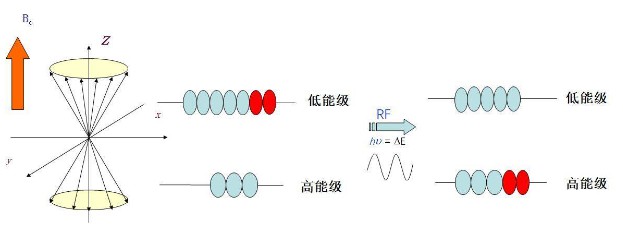
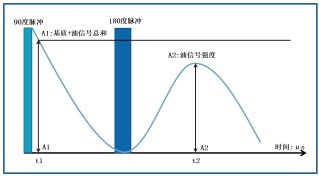
The LF-NMR method for measuring rubber pick-up is based on the differences in relaxation times between hydrogen nuclei in the rubber coating and those in the fiber. By setting specific parameters, the NMR signal corresponding to the coating can be isolated and quantified, allowing accurate calculation of rubber pick-up.
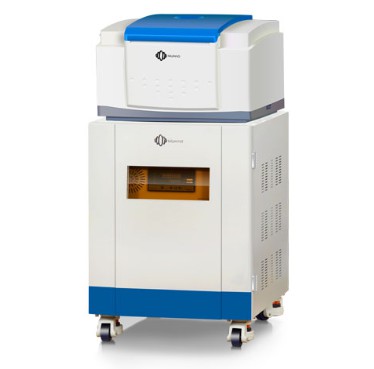
Nuomag PQ001 Series Low-Field NMR Analyzer
Provides a fast and accurate method for measuring rubber pick-up, ideal for quality control in industrial settings.
Rapid analysis improves product quality assurance and production efficiency.
High accuracy minimizes human error in measurement.
Eco-friendly approach eliminates the use of harmful chemical reagents, improving workplace safety.
 Scan QR Code
 Scan QR Code
 Phone Support
Phone: 400-060-3233
After-sales: 400-060-3233
 WeChat Support

 Official Account

Back to Top