


In today’s era of rapid technological transformation, Magnetic Resonance Imaging (MRI) technology, as a non-destructive, microscopic visualization tool applied across various fields, is continuously driving the fast-paced development of sectors such as health, energy, geotechnical and materials science. To further promote international academic and technical exchange and enhance Newmai’s technological innovation capabilities, Professor Liu Feng, a well-known expert in the field of nuclear magnetic resonance, along with his team, visited Suzhou Newmai on July 14, 2024. They held a seminar focused on the future development of Newmai’s low-field NMR technology, in collaboration with Newmai’s R&D department colleagues.
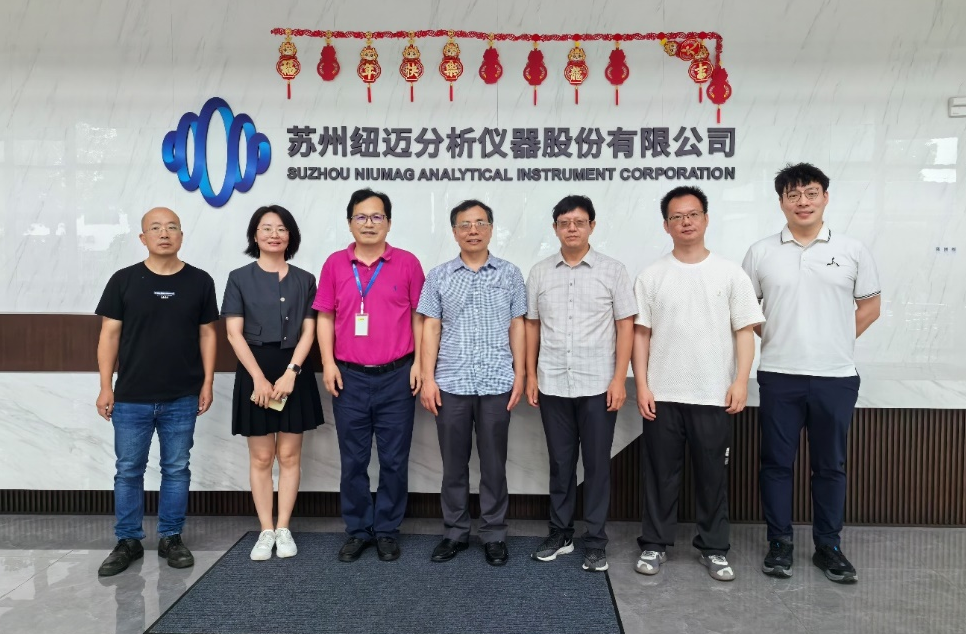
In addition to Professor Liu Feng from the University of Queensland, invited guests included Associate Professors Shan Shan Dan and Chunyi Liu from Soochow University, Researcher Zhi Hua Ren from ShanghaiTech University, and Researcher Yu Jiang from the Shanghai Nuclear Magnetic Resonance Key Laboratory at East China Normal University. The group engaged in in-depth discussions on the development of imaging technologies, such as magnets, RF, and gradient design, under the background of nuclear magnetic technology and the emerging new production capabilities. They also explored the integration of these technologies with cutting-edge digital technologies like artificial intelligence and big data, while discussing future collaboration opportunities for Newmai with top global universities on academic-industrial integration.
The meeting began with Professor Liu Feng providing a comprehensive analysis of the global applications and development trends in nuclear magnetic resonance (NMR) technology. He shared typical case studies of NMR scientific instruments, including ultra-high-field NMR devices (over 11T) co-developed by Professor Liu and his team with Bruker, and innovative developments combining NMR with linear accelerators.


In addition, Associate Professor Shan Shan Dan gave a detailed discussion and analysis on the application of AI technology in MRI imaging. Through her recent research achievements, she demonstrated how AI technology can effectively optimize key issues in human medical MRI imaging, such as artifacts and image deformation. Successfully solving these issues can directly provide doctors with clear dynamic images of patients’ organs, such as the lungs and liver, supporting the development of precise treatments like chemotherapy and complex medical interventions.
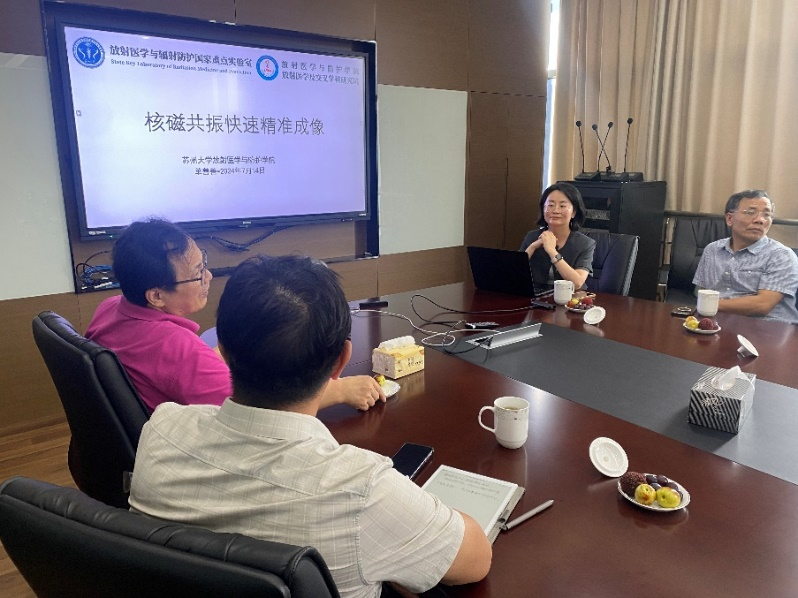
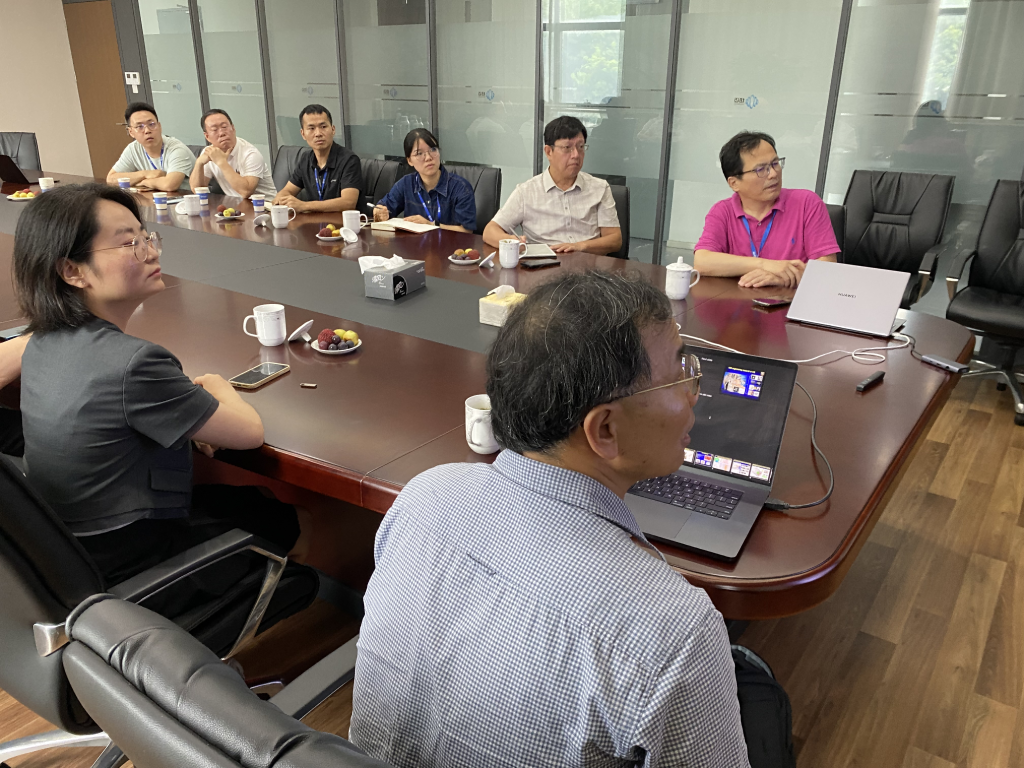
At the conclusion of the meeting, Newmai’s Chairman Yang Peiqiang and his team, along with Professor Liu Feng, Associate Professor Shan Shan Dan, and other experts, engaged in in-depth discussions on commercial-level academic-industrial cooperation. The goal is to combine cutting-edge research resources from the world’s top universities with Newmai’s industry and commercial expertise to create a powerful collaboration that facilitates efficient and seamless application of scientific research into industry. This will help accelerate China’s catch-up with international standards in nuclear magnetic resonance scientific instruments and contribute significantly to their development.
Professor Liu Feng graduated with a PhD in Biomedical Engineering from Zhejiang University in 2000. He then pursued postdoctoral research at the University of Queensland, Australia, and is now a professor in the School of Electrical Engineering and Computer Science at the University of Queensland. His research focuses on MRI electromagnetic design, imaging methods, and biomedical applications. He has published over 200 journal papers and holds more than ten patents. Professor Liu was awarded the Australian Research Council (ARC) Discovery Outstanding Researcher Award.
Dr. Shan Shan Dan is an Associate Professor and Master’s Supervisor at Soochow University. She focuses on research related to rapid MRI imaging algorithms based on artificial intelligence technology. She has dedicated her career to developing new imaging algorithms to improve the accuracy of MRI, applying them to clinical disease treatment guided by precise MRI images. Dr. Dan has published over 10 papers in prestigious international journals such as Nature Reviews Clinical Oncology, ACS Nano, Advanced Science, Magnetic Resonance in Medicine, and IEEE Transactions on Biomedical Engineering. She has also presented nearly 20 papers at international conferences and has led various research projects, including those funded by the National Natural Science Foundation of China and the Australian national-level NMR and linear accelerator collaboration project.
 Scan QR Code
 Scan QR Code
 Phone Support
Phone: 400-060-3233
After-sales: 400-060-3233
 WeChat Support

 Official Account

Back to Top