


The variations in water content and state in coal-water slurry are the fundamental cause of its macroscopic rheological properties. Studying the migration and transformation of water states provides a microscopic understanding of the slurry’s rheological behaviour, offering guidance for the design and optimisation of parameters in pipeline coal transport systems.
1. Experimental Materials
Coal powder was used as the raw material and sieved through 50, 70, 100, 200, and 270 mesh screens to obtain samples. After washing, sieving, and drying, four types of coal powder with relatively uniform particle size were obtained, labelled A, B, C, and D. Their particle size distributions are shown in Figure 1, while particle sizes and uniformity coefficients are shown in Figure 2.
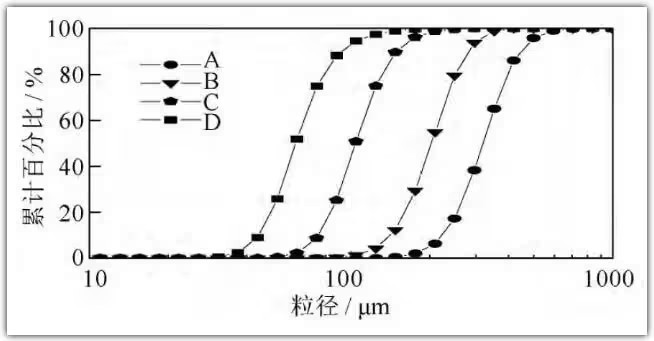
Figure 1: Coal Powder Particle Size Distribution
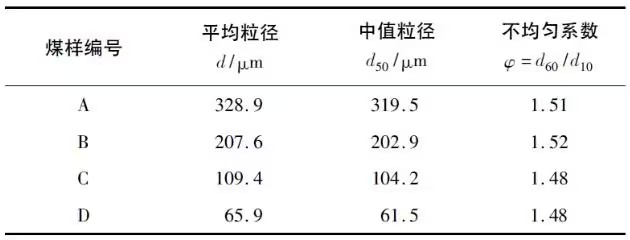
Figure 2: Physical Characteristics of Coal Powder
2. Experimental Equipment and Testing Method
The tests were conducted using the PQ001 NMR analyser produced by Suzhou Newmai Analytical Instruments Co., Ltd. The specific instrument parameters and CPMG experimental settings are detailed in the original reference and are not repeated here.
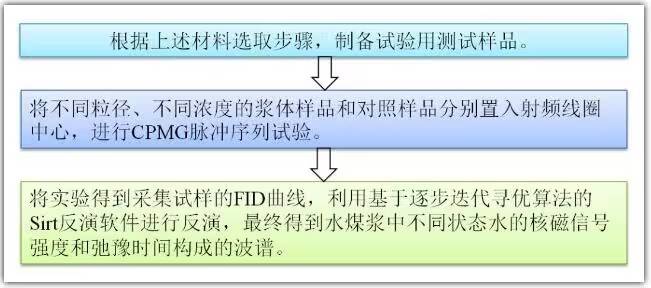
Testing Methodology
1. Analysis of Different Water States in the Slurry
Relaxation signals from NMR inversion for coal-water slurries of various concentrations and particle sizes are shown in Figure 3.
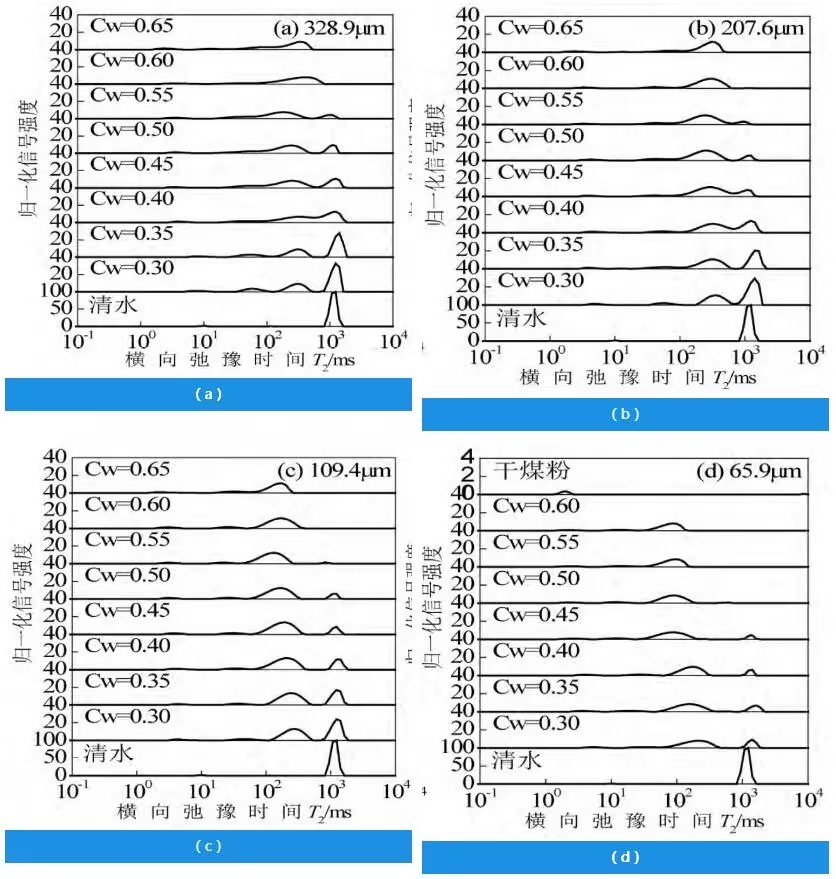
Figure 3: T2 Distribution of Coal-Water Slurry
The figure clearly shows:
① All samples exhibit three relaxation peaks. Different slurry concentrations produce distinct relaxation signals, with the rightmost peak diminishing as concentration increases.
② For slurries with different particle sizes, the weighted average T2 values of each peak decrease as concentration increases, indicating a leftward shift of the T2 spectrum overall.
2. Quantitative Analysis of Different Water States
Coal-water slurries contain three types of water: adsorbed water on particle surfaces, interstitial water between particles, and free water. Due to their differing physicochemical states, their mobility varies significantly. This is illustrated in Figure 4.
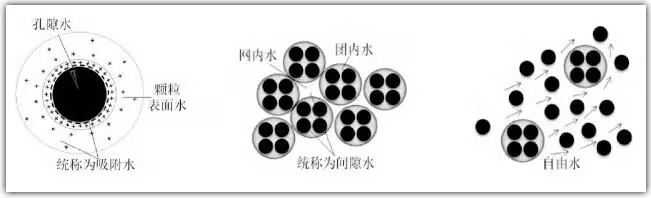
Figure 4: Schematic of Different Water States in the Slurry
Using the peak area ratios from the T2 spectra of different water states, the proportions of adsorbed water, interstitial water, and free water relative to total water content under varying concentrations and particle sizes can be quantified. This allows calculation of water content for each state.
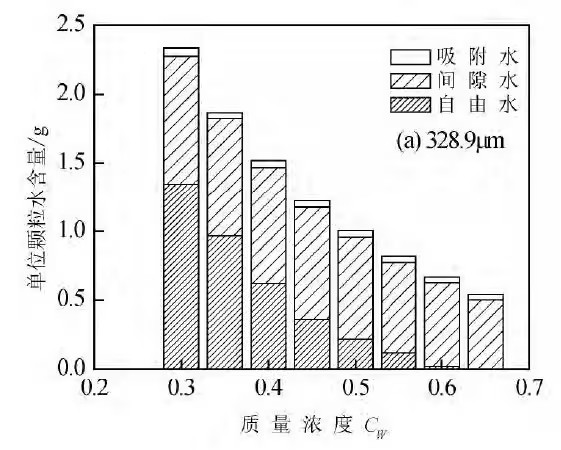
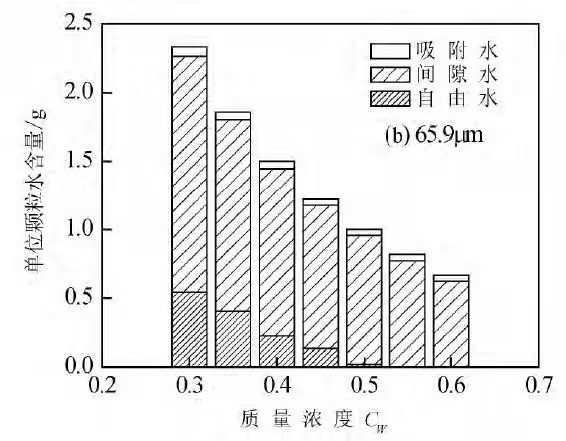
Figure 5: Relationship Between Concentration and Water in Different States
3. Analysis of Water Content in Different Particle Sizes
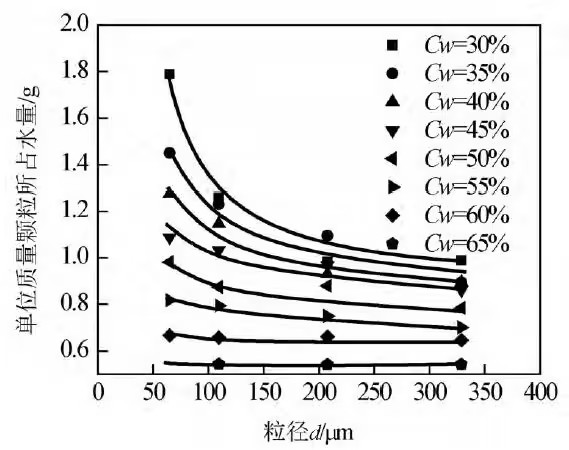
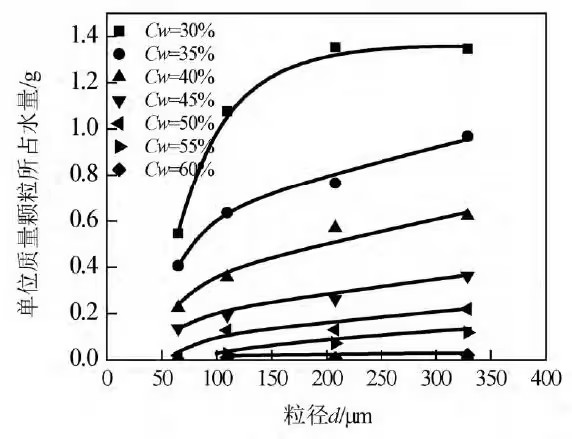
Figure 6: Relationship Between Particle Size and Water Content in Different States
Figure 6a shows the effect of particle size on interstitial water for various concentrations. Overall, interstitial water decreases with increasing particle size, with the extent of change divided at 55% concentration.
Figure 6b illustrates the relationship between particle size and free water at different concentrations. When concentration is below 55%, larger particles contain more free water per unit mass; above 55%, free water content is negligible. This occurs because smaller particles exhibit stronger adsorption and agglomeration, with more water existing as interstitial or adsorbed water.
1) Coal-water slurries of different particle sizes and concentrations exhibit three distinct relaxation peaks, corresponding to adsorbed, interstitial, and free water.
2) At a fixed particle size, adsorbed water remains unaffected by concentration, interstitial water increases with concentration, and free water decreases. At a fixed concentration, adsorbed and interstitial water decrease with increasing particle size, while free water increases.
3) Particle size and concentration are key factors influencing water content in different states. These effects arise from interparticle spacing, adsorption between fine particles and water molecules, and the strength of particle agglomeration.
Reference:
Long H, Xia J, Cao B. Water State and Quantitative Analysis in Coal-Water Slurry Based on Low-Field NMR Technology[J]. Sediment Research, 2018, 43(03):44-49.
Newmai Note: For more cutting-edge research on low-field NMR technology, follow the official Newmai WeChat account.
Recommended Instrument:
NMR Oil-Water Content Analyzer PQ001-20-025V
 Scan QR Code
 Scan QR Code
 Phone Support
Phone: 400-060-3233
After-sales: 400-060-3233
 WeChat Support

 Official Account

Back to Top