


Particle Dispersibility refers to the process by which powder particles are separated and uniformly distributed within a liquid medium. Based on different dispersion methods, it can be classified into the following types:
Mechanical Stirring Dispersion: This method relies on external mechanical energy—such as shear or impact force—to fully disperse nanoparticles in a medium. Mechanical agitation induces physical or chemical changes in the dispersion system, sometimes triggering additional chemical reactions to achieve dispersion. However, the grinding medium may introduce new impurities, and this method can be limited in producing ultra-fine particles.
Solvent Dehydration: This method uses organic solvents with low surface tension to replace water molecules adsorbed on particle surfaces, thereby reducing capillary forces that cause agglomeration. Alcohols are commonly used, aiming to remove coordinated water and replace surface hydroxyl groups with alkoxy groups to improve dispersibility.
Particle Size Characterization: In a suspension, smaller particle size and higher temporal stability indicate better dispersibility and resistance to agglomeration. Particle size distribution is often used to compare the dispersibility of particles before and after surface modification. A narrow, monodisperse distribution suggests better dispersion, whereas a shift toward larger sizes indicates poorer dispersion.
Electron Microscopy Characterization: Scanning electron microscopy (SEM) provides a direct and visual representation of particle distribution in a liquid system. A drop of dispersed suspension is deposited on an SEM substrate, dried, and imaged. The level of dispersion can be easily judged from the micrographs.
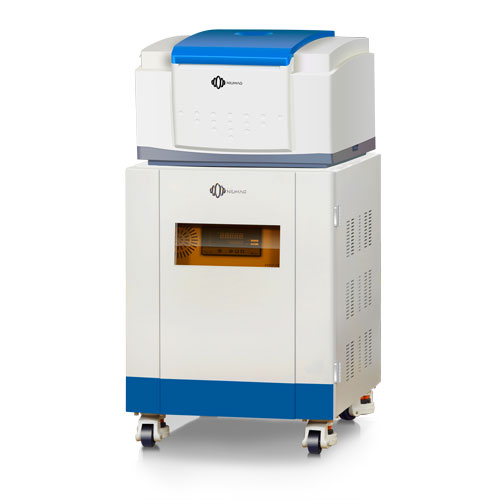
Low-Field NMR Characterization: LF-NMR is a fast, non-destructive technique suitable for both research and industrial applications. One key benefit of LF-NMR is its non-invasive nature—measurements can be repeated on the same sample. This minimizes the amount of material needed for stability studies and reduces sample variability, particularly useful during early-stage process development. Thermal studies, including high-temperature or freeze–thaw cycles, can also be conducted directly within the NMR tube. While rheology is often used to monitor concentrated dispersion stability, it typically requires large sample volumes and is destructive. In contrast, LF-NMR allows continuous, non-destructive monitoring of the same sample throughout a stability study.
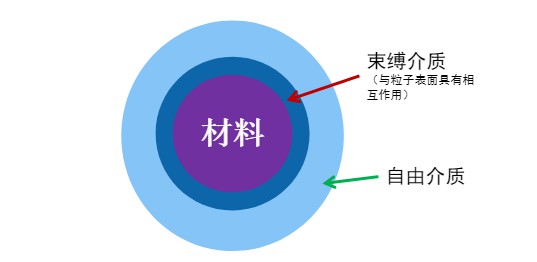
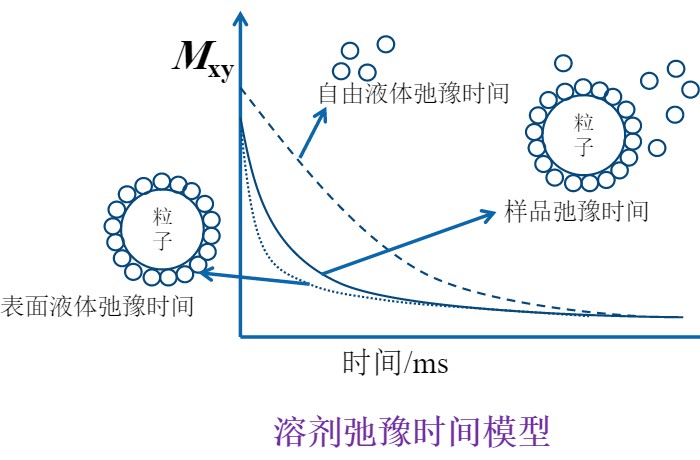
The relaxation rate of the solvent in a particle dispersion is linearly proportional to the available particle surface area. Solvents associated with free polymers, loops, or tails show little change in relaxation rate because of their high mobility. However, when polymers adsorb onto particle surfaces, the increased proportion and/or residence time of water molecules near the surface leads to higher overall relaxation rates. These relaxation differences can be captured using low-field NMR to quantify particle dispersibility.
 Scan QR Code
 Scan QR Code
 Phone Support
Phone: 400-060-3233
After-sales: 400-060-3233
 WeChat Support

 Official Account

Back to Top