


In processing technology evaluation, the advantages of low-field nuclear magnetic resonance (LF-NMR) are fully leveraged due to its non-destructive and rapid nature. Being non-destructive allows a single sample to undergo multiple longitudinal tests, reducing errors caused by sample variation. Speed ensures continuity in processing and enables real-time, online monitoring throughout the production workflow.
Changes in T2 Relaxation Characteristics of Beef During High-Temperature Braising
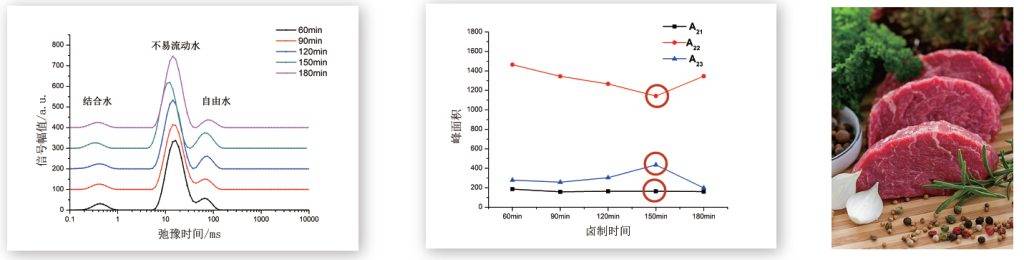
Early braising stage (60–90 min): High temperatures disrupt protein structure, causing water to migrate from within the myofibrils to the exterior. Simultaneously, elevated heat induces muscle fiber contraction and breaks down the protein network, resulting in reduced water-holding capacity.
Mid braising stage (90–180 min): Continued moisture loss within muscle fibers leads to increased osmotic gradients. Around 150 minutes, a “reverse absorption” effect occurs, with water migrating from the extracellular space back into the cells.
T1-Weighted Imaging of Beef During Braising
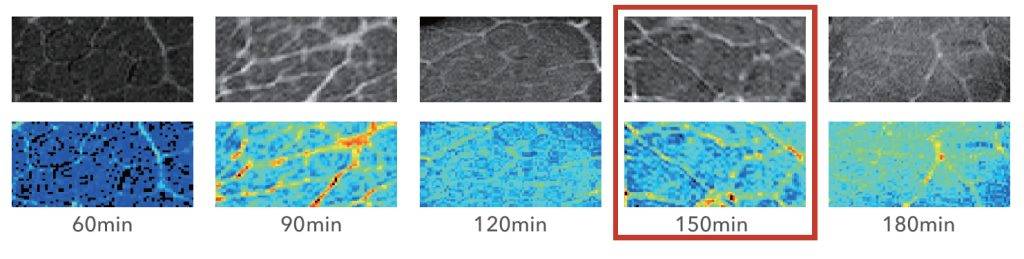
T1-weighted MRI imaging reveals fat dissolution and the internal–external migration of water during the braising process. This visual representation helps monitor dynamic changes in meat quality and guides the optimization of processing parameters.
 Scan QR Code
 Scan QR Code
 Phone Support
Phone: 400-060-3233
After-sales: 400-060-3233
 WeChat Support

 Official Account

Back to Top