


Jatropha curcas, also known as Physic Nut, Purging Nut, or Jungle Peanut, is a promising bioenergy tree species. The fruit of Jatropha contains a high oil content ranging from 30% to 47%, with kernel oil content reaching up to 40% to 60%—significantly higher than many traditional oil crops. The seed oil can be directly used as an alternative energy source or converted into upgraded biodiesel through transesterification. Because oil content in Jatropha seeds is a heritable trait, selecting high-oil-content seeds during the breeding process is critically important.
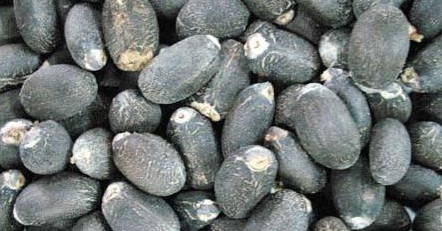
Nuclear Magnetic Resonance (NMR) technology provides a rapid, convenient, and non-destructive method for determining the oil content of oil-bearing seeds. This technique has been widely applied to crops such as rapeseed, soybeans, peanuts, and sunflower seeds. In this article, we present the application of NMR for measuring oil content in Jatropha seeds, and compare its performance with the traditional Soxhlet extraction method.
NMR can quantify hydrogen protons in different components based on relaxation times. In dried Jatropha seeds, water is tightly bound to the solid matrix, whereas oil remains in a free state. Due to differences in relaxation characteristics, NMR can distinguish between water and oil signals, enabling precise oil content measurement.
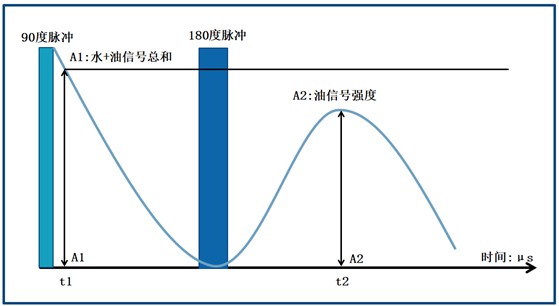
The measurement is conducted using a spin echo sequence. As illustrated below, a Free Induction Decay (FID) signal is recorded at time t1 after the 90° RF pulse, resulting in signal amplitude A1—representing the combined signal of oil and moisture. Following the 180° pulse, the spin echo signal amplitude A2 is measured; by this point, the water signal has decayed completely, leaving only the oil signal. Oil content can then be quantified based on the correlation between signal strength and hydrogen proton concentration.
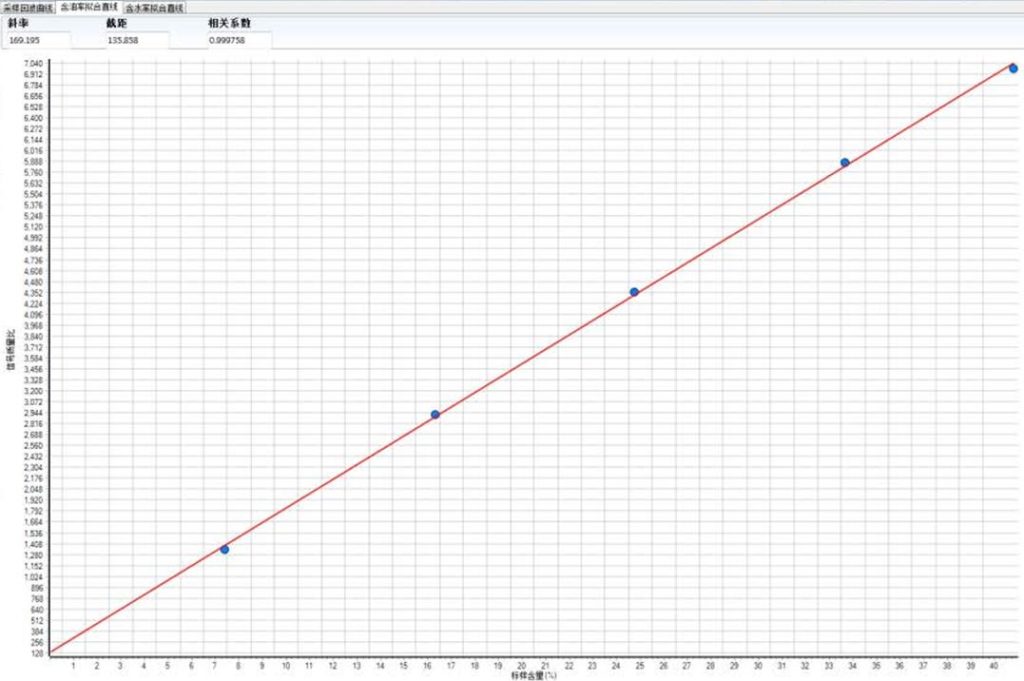
Calibrations are performed using hot-pressed Jatropha seed oil as the reference standard. Three sets of seeds are selected, each consisting of 10 individual seeds. The weight of each seed is recorded and input into the system. Following NMR scanning, the program automatically calculates the oil percentage per seed using RF signal response and the established calibration curve. The apparent oil content for each group is represented by the average oil content of its 10 seeds.
Once calibrated with 3–6 known oil-content samples (or hot-pressed oil), the NMR system can evaluate unknown samples within just 30 seconds to 3 minutes. The testing process is fast, non-destructive, and ideal for industrial in-line analysis.
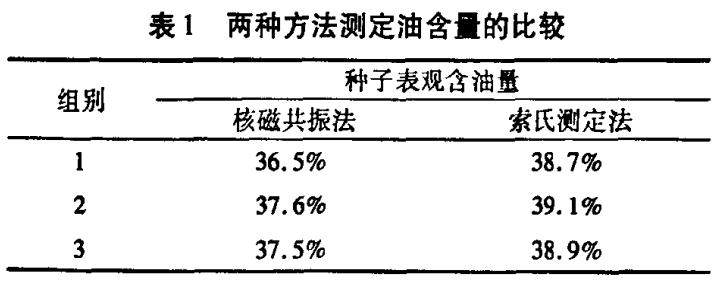
Oil content using the Soxhlet method is determined in accordance with GB5512—85 national standards. The NMR-tested Jatropha seeds are subjected to Soxhlet extraction, and the results from both methods are compared.
Recommended Instrument: NMR Moisture and Oil Content Analyzer

[Reference: [1] Lei Lei, Liang Hui, Peng Tong, et al. Study on Determination of Oil Content in Jatropha Seeds by NMR Method [J]. Seeds, 2009(05):81-83.]
 Scan QR Code
 Scan QR Code
 Phone Support
Phone: 400-060-3233
After-sales: 400-060-3233
 WeChat Support

 Official Account

Back to Top