


Solid Fat Content (SFC) refers to the proportion of fat present in solid form at a given temperature. The relationship between SFC and temperature determines the specific applications of edible oils and fats. The solid fat content at different temperatures defines the product’s usability and areas of application. As such, SFC is a vital quality-control parameter.
The traditional method for measuring SFC is the dilatometry method. However, it is very slow, has limited accuracy, involves cumbersome testing procedures, and requires skilled operators. Consequently, it suffers from inefficiency and high risk of human error.
Nuclear magnetic resonance (NMR) has become the preferred technique for determining solid fat content. NMR enables fast and accurate measurement, providing robust assurance for product quality control.
Principle of NMR measurement for solid fat content:
Protons in solid fats and liquid fats exhibit markedly different behaviours in the free induction decay (FID) signal. Solid fat signals decay very quickly, usually disappearing within tens of microseconds. Liquid fat signals decay much more slowly and show negligible loss at the same time scale.
The direct NMR method distinguishes between solid and liquid signals by measuring the FID of the sample. Since signals from solids decay much faster than those from liquids, appropriate time points on the FID can be selected to capture both contributions separately. From this, the solid fat content can be directly calculated.
NMR instrumentation and workflow for SFC testing
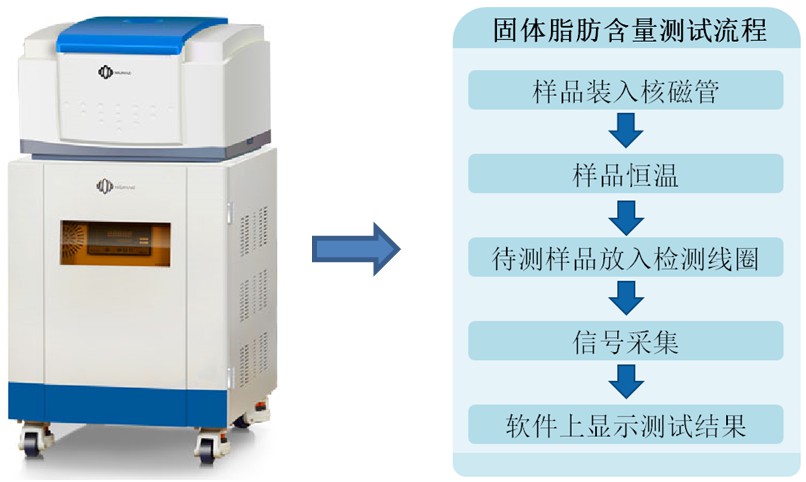
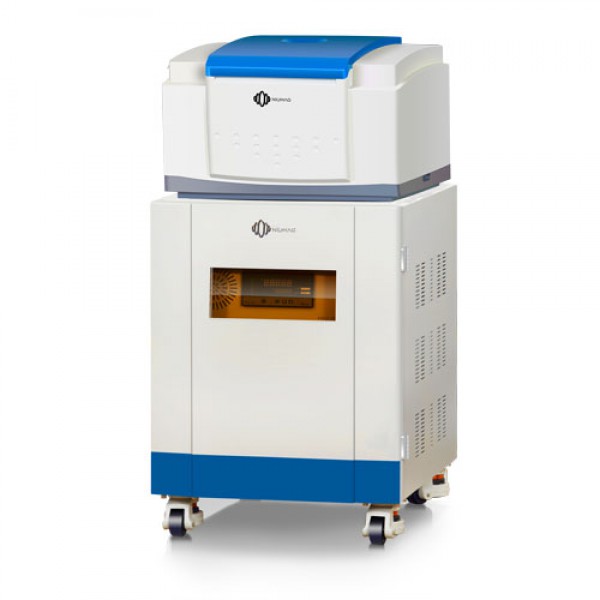
Recommended instrument: PQ001-SFC NMR Solid Fat Content Analyser
 Scan QR Code
 Scan QR Code
 Phone Support
Phone: 400-060-3233
After-sales: 400-060-3233
 WeChat Support

 Official Account

Back to Top