


[Introduction] How has nuclear magnetic resonance (NMR), as an advanced scientific instrument, contributed to coal mining and coalbed methane management? What are its future prospects? Recently, Instrument Info Network interviewed Associate Professor Kan Jiaguang from China University of Mining and Technology, along with Dr. Sun Yong from Professor Zhai Cheng’s research team.
Coal remains a crucial primary energy source and industrial raw material, making significant contributions to the rapid and healthy development of China’s economy. Despite the rapid growth of renewable and alternative energies, coal will continue to be the dominant energy source for the foreseeable future. In recent years, efforts to phase out outdated capacity and promote green, intelligent, and deep mining have become key development directions. How has NMR, as a cutting-edge scientific instrument, played a role in coal mining and coalbed methane management, and what does its future hold? Instrument Info Network recently spoke with Associate Professor Kan Jiaguang of China University of Mining and Technology and Dr. Sun Yong of Professor Zhai Cheng’s team.
Low-Field NMR Driving Research on Coal-Rock Fracture Distribution and Slurry Flow Mechanisms
Kan Jiaguang, Associate Professor at the School of Mining Engineering, China University of Mining and Technology, has focused on roadway surrounding rock control theory and technology since starting his career. He has participated in or led more than 40 research projects, including the National Basic Research Program (973), major consulting projects of the Chinese Academy of Engineering, the 11th Five-Year Plan Science and Technology Support Program, and the National Natural Science Foundation. His achievements include eight provincial and ministerial awards such as the Second Prize of the Ministry of Education Science and Technology Progress Award and the Second Prize of the China Coal Industry Science and Technology Award. He has published 31 SCI/EI-indexed papers and holds 16 authorized invention patents and nine utility model patents, and has co-edited two textbooks.
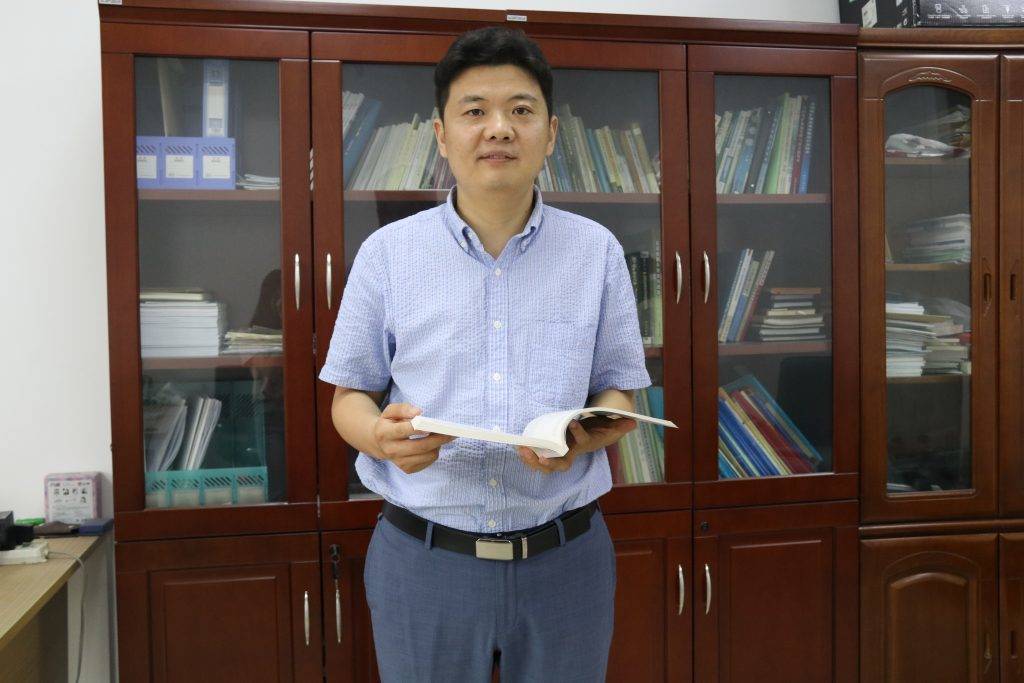
Associate Professor Kan Jiaguang, China University of Mining and Technology
In mining, fracture analysis and grouting reinforcement have long been research hotspots and challenges. To advance scientific research on coal-rock fracture distribution and the micromechanisms of slurry flow, highlighting the strengths of China University of Mining and Technology, the School of Mining Engineering introduced the large-aperture NMR imaging analyser MacroMR12-150H-I from Suzhou Newmai Analytical Instruments Co., Ltd. in December 2018. This instrument is used to study coal-rock grouting processes and slurry solidification.
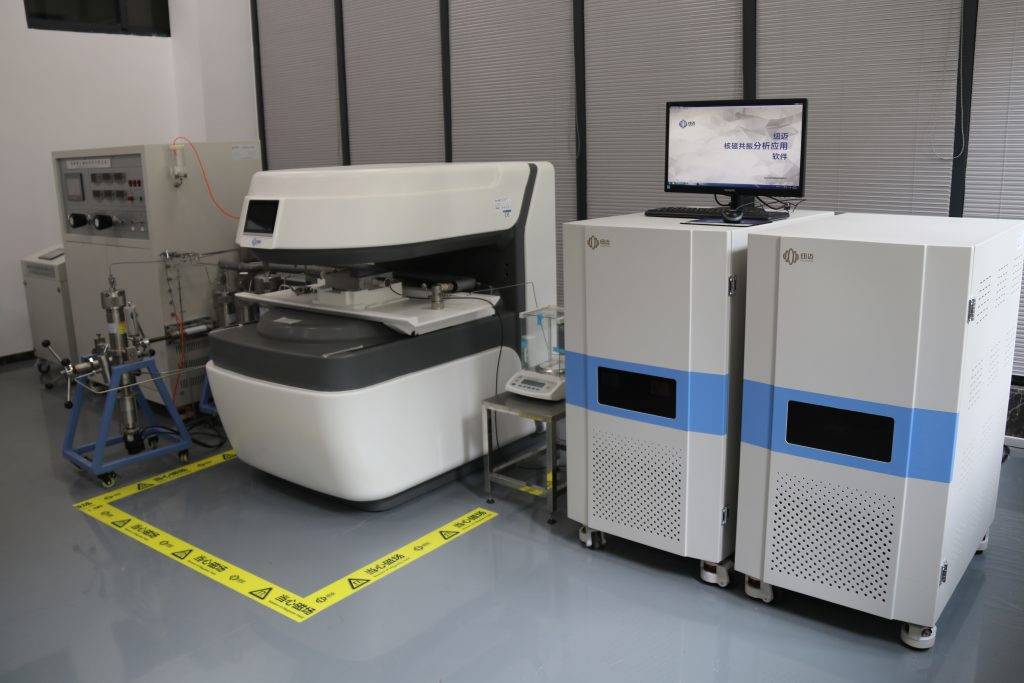
Large-Aperture NMR Imaging Analyser MacroMR12-150H-I
During the interview, the second Newmai “Service Across Miles” event was underway at the Nanhu Campus of China University of Mining and Technology. The Instrument Info Network editor visited Associate Professor Kan Jiaguang’s laboratory, where he was discussing instrument applications with Newmai technicians. Regarding the choice of Newmai’s NMR instruments, he stated: “Many research directions in mining are closely related to fluid seepage in rock masses. We wanted to use the NMR imaging analyser in combination with online grouting equipment to monitor fluid migration in rock samples in real time. After extensive domestic research, we found that Newmai instruments could meet our functional requirements and this formed the basis for collaboration.”
China University of Mining and Technology’s mining engineering discipline has been included in the national “Double First-Class” initiative. He explained: “Deep mining and fluidised mining are key tasks for building first-class disciplines. The School plans to leverage this initiative to establish a well-equipped, technologically advanced, and forward-looking research platform. The NMR system will serve this research ecosystem.” As a new user of domestic analytical instruments, Associate Professor Kan hopes that local manufacturers will accelerate the development of NMR instrumentation, enhance software analysis capabilities, and provide more reliable support for NMR applications in the energy and geoscience sectors.
Low-Field NMR Facilitating Coal Fracture Distribution Evaluation Methods
Dr. Sun Yong, another interviewee, works under Professor Zhai Cheng. His research group has recently focused on methods to enhance coal seam fracturing, including pulsed hydraulic fracturing, liquid nitrogen cyclical low-temperature shock fracturing, liquid carbon dioxide fracturing, and characterisation of coal pore structures. Dr. Sun explained that to improve gas extraction efficiency in low-permeability coal seams, the team developed pulsed hydraulic fracturing enhancement technology. By applying pulsed water pressure, alternating stress occurs at the tips of coal fractures, causing fatigue damage and creating a richer fracture network. Compared with static hydraulic fracturing, the initiation pressure decreases by over 35% and the number of fractures increases by more than 20%.
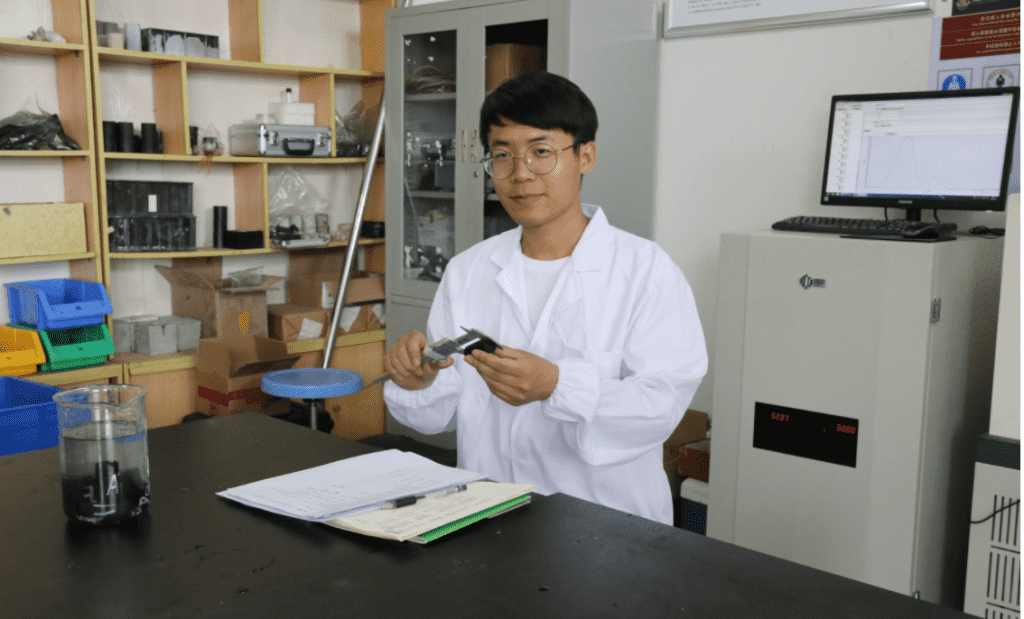
Dr. Sun Yong, China University of Mining and Technology
Periodic injection of liquid nitrogen into coal creates extreme temperature stress, as liquid nitrogen at atmospheric pressure reaches -196°C. Freezing of pore water generates pressures up to 200 MPa and 9% volume expansion, extending fracture tips via ice wedge action. The cyclical freeze-thaw also induces fatigue damage in the coal. Dr. Sun described this as the liquid nitrogen cyclical low-temperature shock fracturing method, a novel water-free technique suitable for the water-scarce northwest regions of China. This triple-action method forms an interwoven, connected fracture and pore network, significantly improving coalbed methane extraction efficiency.
The team’s third research area involves liquid carbon dioxide fracturing. Using liquid CO₂ as the fracturing fluid, cyclic injection produces fatigue damage and promotes development of original and secondary fractures through water-ice phase expansion, CO₂ gas expansion, and chemical acidification. This creates an interconnected three-dimensional fracture network, enhancing coal permeability. This approach also enables effective greenhouse gas sequestration and enhances coal seam gas displacement through competitive CO₂ adsorption.
Additionally, the group has studied static fracturing agents and traditional pore-blocking materials. In Professor Zhai’s research, NMR technology is maturely applied in liquid nitrogen cyclical and CO₂ fracturing, primarily for analysing evolution of coal pore structures. Using these insights, the team has developed a systematic methodology to evaluate how different fracturing methods affect coal porosity and permeability.
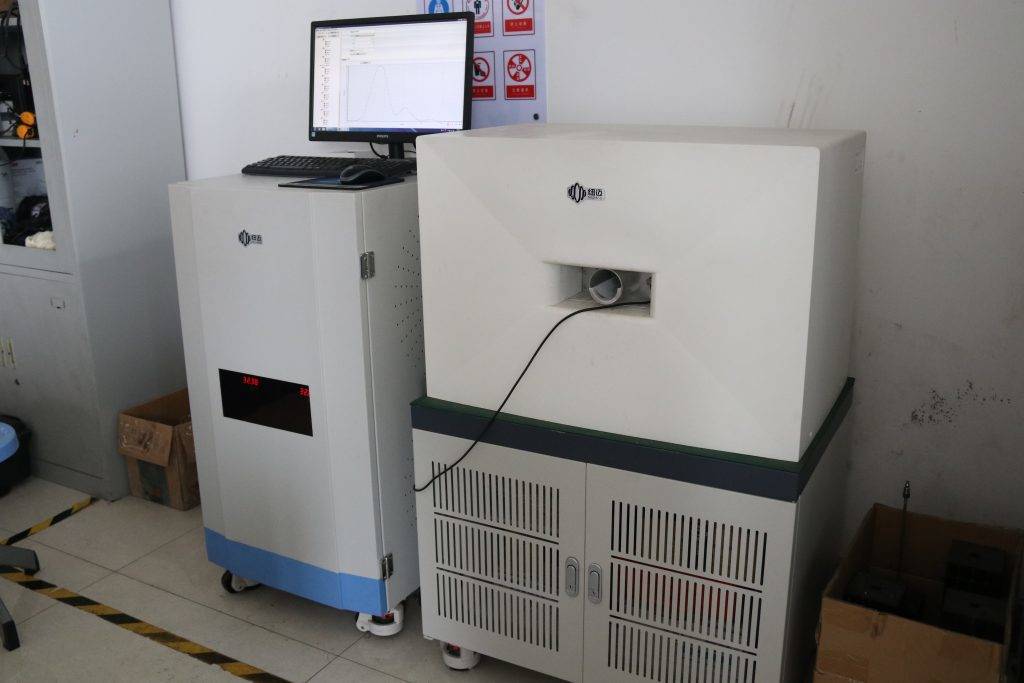
Meso-Scale NMR Imaging Analyser MesoMR23-060H-I
Dr. Sun Yong stated: “Compared with conventional porosity measurement methods like mercury intrusion and gas adsorption, NMR enables non-destructive analysis of samples up to 50mm×50mm, covering pore sizes from 2nm to 1mm. Within minutes, it provides porosity, pore size distribution, bound and free fluid distribution, and permeability data, greatly facilitating research and publication.”
Since his graduate studies, Dr. Sun has used NMR to analyse coal pore structures. With over five years of experience using low-field NMR equipment, he maintains effective communication with Newmai engineers online. He added: “NMR porosity measurement theory is now very mature. Newmai provides stable, low-maintenance equipment that is extremely convenient. We maintain good communication—if data issues arise, engineers assist remotely, and new results or software updates are promptly shared. This two-way communication enhances both the product usage and our professional skills.”
In 2013, the research group collaborated with Newmai as the task lead for the Ministry of Science and Technology’s Major Scientific Instrument Development Project: “Development and Application of High-Performance NMR Relaxation Analyser.” The sub-task focused on “Development of Coal-Rock Fracture Distribution Evaluation Methods Using NMR Relaxation Analysis.” The project compared NMR with mercury intrusion and scanning electron microscopy for evaluating coal-rock fractures, confirming NMR’s advantages in coal sample analysis. Moving forward, the team aims to integrate NMR with CT and other methods to further advance coal pore structure analysis applications.
[Source: Instrument Info Network]
 Scan QR Code
 Scan QR Code
 Phone Support
Phone: 400-060-3233
After-sales: 400-060-3233
 WeChat Support

 Official Account

Back to Top