

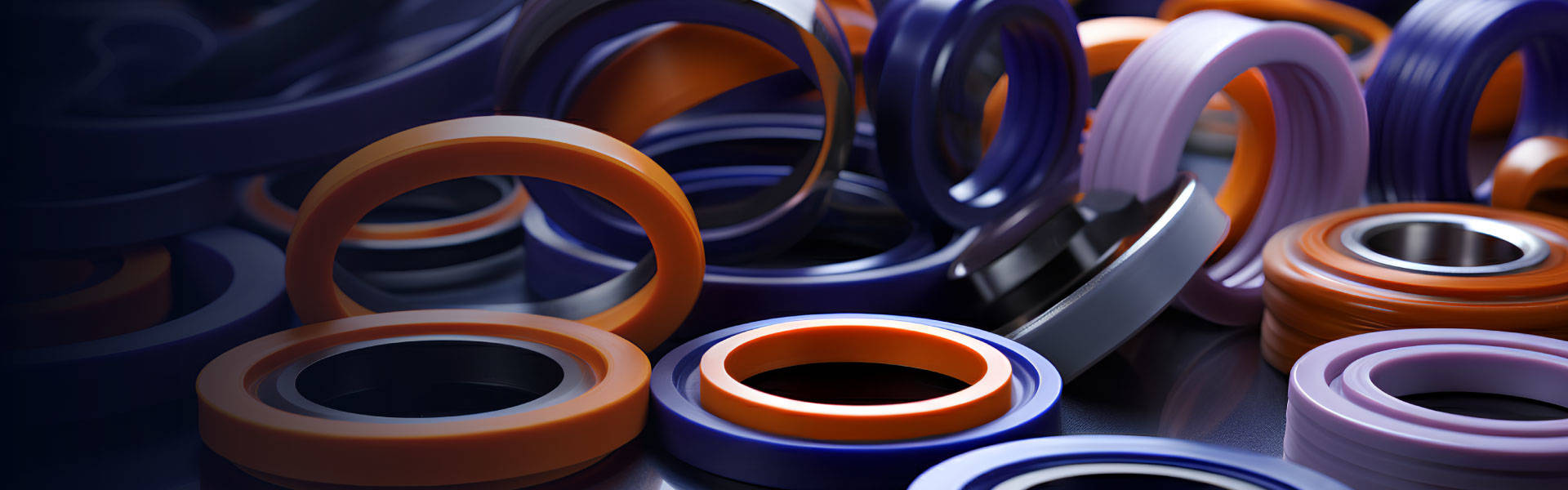
As rubber products are used more frequently, they have gained a reputation for excellent performance and overall great user experience. However, many long-term users have started to notice the aging phenomenon of rubber products. So, why do rubber products undergo aging?
The adhesion of rubber resins is higher than that of many other rubbers, but like other types of rubber, they too undergo aging due to the rupture of internal molecular chains, resulting in significant changes in their performance. For rubber and plastic products, ultraviolet (UV) light is the most damaging factor. UV rays directly cause the rupture of the rubber’s molecular chains, as rubber products can absorb light energy, leading to the formation of free radicals within the rubber.

1. Frequent exposure to high temperatures or high-temperature environments. High temperatures accelerate the oxidation of rubber materials, which leads to aging.
2. Chemical factors. Essentially, rubber is a chemical material, and some chemical factors can speed up its aging process.
3. Ozone. Silicone materials are particularly sensitive to ozone, which can cause rubber products to degrade rapidly and age quickly.
Rubber aging is one of the primary causes of performance deterioration. Given that product formulations and usage conditions vary, the aging process occurs at different rates. Therefore, testing techniques are required to assess the degree of aging and its impact on rubber’s performance. Low-field nuclear magnetic resonance (NMR) technology can be used to detect rubber aging.
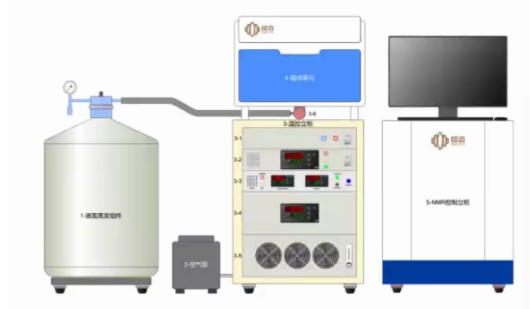
NuMag VTMR Series Low-Field NMR Analyzer
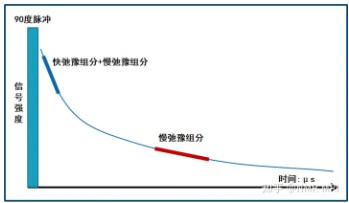
Low-field nuclear magnetic resonance (NMR) technology works by measuring the relaxation time of 1H in a sample under a constant magnetic field to obtain dynamic molecular structural information. The basic principle is to apply a radiofrequency pulse to the sample placed in a constant magnetic field, causing hydrogen protons to resonate. The energy absorbed by the protons from the radiofrequency pulse is released non-radiatively as they return to their ground state, a process known as relaxation. Relaxation can be further divided into transverse and longitudinal relaxation. The relaxation time is determined by the physical and chemical environment and the state of the hydrogen protons inside the sample. From a physical perspective, the nuclear magnetic relaxation process is an energy exchange between the spin hydrogen nuclei and the surrounding environment. Nuclear magnetic resonance occurs when non-zero spin atoms in a static magnetic field are magnetized and resonate with a specific radiofrequency field, absorbing energy from the pulse and interacting with surrounding materials, releasing energy, and returning to the initial state.

Rubber aging is a complex process in which the crosslinking system changes. The relaxation mechanism in nuclear magnetic resonance is highly sensitive to these changes, mainly reflected in the regular variation of transverse relaxation time T2 with reaction time. By studying the variation of relaxation times in rubber samples during the aging process and their relationship with aging performance, we can indirectly assess the aging characteristics of rubber.

 Scan QR Code
 Scan QR Code
 Phone Support
Phone: 400-060-3233
After-sales: 400-060-3233
 WeChat Support

 Official Account

Back to Top