


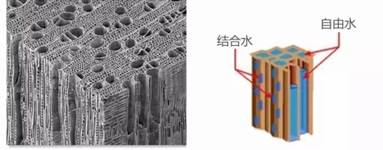
The fiber saturation point (FSP) refers to the specific moisture content at which water absorbed in the cell walls of lignocellulosic materials is fully saturated, while there is no free water in the cell cavities or intercellular spaces. The fiber saturation point marks a critical threshold at which the physical and mechanical properties of wood begin to change. FSP can be measured using various methods, such as electrical methods, shrinkage tests, differential scanning calorimetry (DSC), and mechanical testing. However, these conventional methods generally suffer from complex procedures, multiple limitations, and lengthy testing times. Moreover, results obtained from different methods can vary, and accuracy remains a topic of debate.
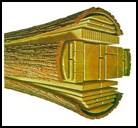
Low-field nuclear magnetic resonance (LF-NMR) technology can be used to determine the fiber saturation point of wood. This method allows for rapid measurement of FSP, offering a simple and convenient testing process that is both non-destructive and non-invasive.
The T2 relaxation times of solid ice and liquid water in NMR are vastly different: ice has a T2 of approximately 6 µs, whereas water absorbed in wood generally exhibits millisecond-scale T2 relaxation times, making them easily distinguishable. NMR analyzers use protons as probes, providing precise information on moisture content within porous media. By selecting an appropriate temperature to freeze the free water in the wood cell cavities while keeping absorbed water in the cell walls liquid, the total signal of water absorbed in the cell walls can be accurately obtained.
1. Raw wood materials
2. Wood products
3. Bamboo

T2 distribution of Ponderosa pine samples after thermal treatment at different temperatures
 Scan QR Code
 Scan QR Code
 Phone Support
Phone: 400-060-3233
After-sales: 400-060-3233
 WeChat Support

 Official Account

Back to Top