


Low-Field Nuclear Magnetic Resonance (LF-NMR) and Magnetic Resonance Imaging (MRI) have gained growing attention in the fields of food and agricultural product analysis. These techniques offer fast, non-destructive detection while providing signal information in both time and spatial domains. This article provides a brief overview of LF-NMR technology for moisture analysis in food and agricultural products, as well as its applications in processing and storage.
Moisture is one of the most critical components in food. Its content, distribution, mobility, and changes directly impact product appearance, texture, rheological behavior, stability, susceptibility to microbial growth, and shelf life. Traditional moisture measurement methods include drying, distillation, Karl Fischer titration, conductivity analysis, and near-infrared spectroscopy. However, many of these techniques fall short in accuracy, sensitivity, or cause irreversible damage to the samples.
Conventional methods offer limited insight into the physical binding states or mobility of water molecules in food systems. Effective monitoring and control of water migration are essential for predicting shelf life and improving product stability. This requires an advanced analytical method capable of detecting both the quantity and spatial distribution of water within the sample.
Low-field NMR analysis and imaging—a rapidly evolving technology—brings a host of advantages to moisture measurement. It is non-invasive and non-contaminating, offering fast and accurate results. It provides both temporal and spatial information simultaneously, allowing for detailed relaxation time distributions and internal imaging of moisture states across any sample cross-section. This makes it ideal for exploring internal structural characteristics of complex food systems.
● Moisture Content Measurement
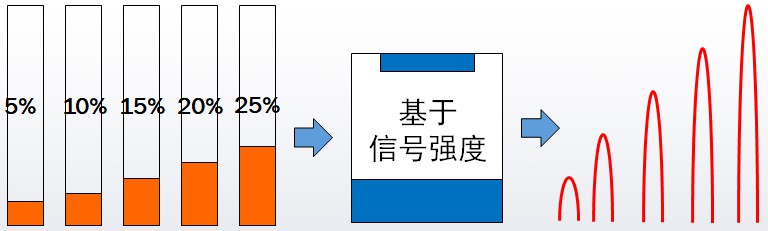
LF-NMR technology has long been applied to moisture determination in seeds, wood, and food products. The intensity of the NMR signal is directly proportional to the number of hydrogen protons, enabling quantitative correlation between signal magnitude and moisture content.
● T2 Distribution and Water Mobility Analysis
Beyond quantifying total moisture, low-field NMR provides T2/T1 relaxation time distribution maps that reveal the mobility characteristics of various water fractions. Different food types exhibit distinct T2 spectra. For instance, moisture in meat and meat products typically appears in three distinguishable states in T2 relaxation profiles, reflecting tightly bound, immobilized, and free water fractions.

● Water Mobility Change During Processing
Food processing methods significantly affect the distribution and mobility of water within a product. LF-NMR can detect these changes rapidly and with precision. Since the measurement is non-destructive and requires no sample preparation, it is highly suited for real-time monitoring of process changes. This empowers producers with valuable insights to optimise process control and ensure consistent product quality.

LF-NMR technology plays an integral role in moisture quantification, distribution analysis, and monitoring water mobility changes in food and agricultural products. It has been correlated with quality attributes, as well as processing and storage behaviors. The technique allows fast, real-time evaluation and prediction of product performance. As domestic LF-NMR instrumentation becomes more affordable and technologically advanced, its use in food moisture analysis is expected to grow exponentially across the industry.
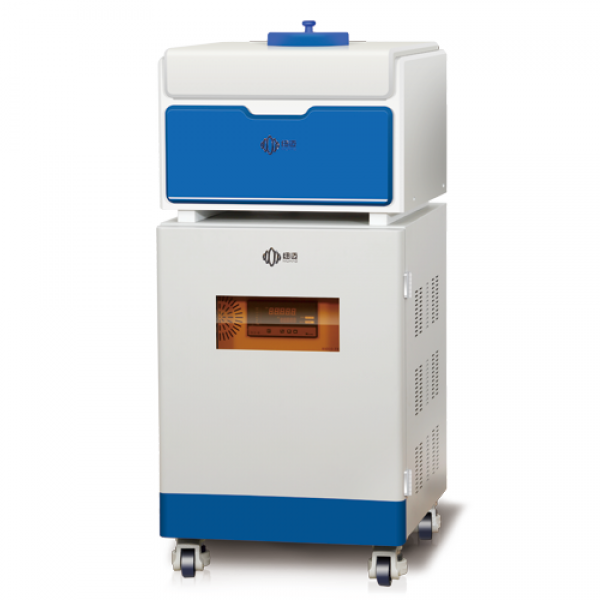
Recommended Instrument: NMI20-040V-I Magnetic Resonance Imaging Analyzer
 Scan QR Code
 Scan QR Code
 Phone Support
Phone: 400-060-3233
After-sales: 400-060-3233
 WeChat Support

 Official Account

Back to Top