

Thermal interface materials (TIMs) are primarily used to enhance the heat dissipation efficiency and performance of electronic devices. Their main function is to eliminate air gaps between electronic components and heat sinks, allowing heat generated during operation to be more evenly and efficiently dispersed. Common types of TIMs include thermal grease, thermal gel, thermal pads, phase change materials (PCMs), graphite sheets, sheet-type gap fillers, and liquid-type gap fillers.
Since air is a poor thermal conductor, any gaps between heat sources and heat sinks can impede heat transfer and reduce overall cooling effectiveness. To address this, TIMs are used to fill those microgaps, displacing air and significantly reducing contact thermal resistance.
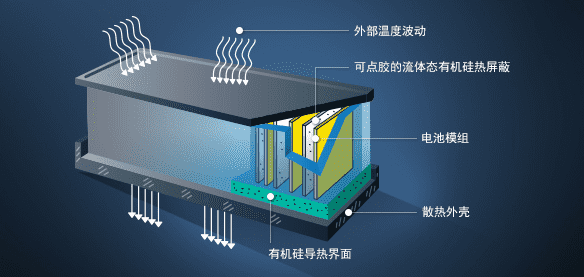
TIMs are widely applied—not only between chips and heatsinks but also to channel internal heat to the external housing of a device. By enabling better contact, they help the cooling system work more efficiently, ensuring that machines and electronic systems operate within safe temperature ranges.
What aspects should we focus on when evaluating thermal interface materials?
Thermal adhesive is a special type of bonding material that not only provides adhesion between surfaces but also offers thermal conductivity. Below are some key factors to consider when assessing the performance of thermal adhesives:
1. Thermal conductivity is the most important property. The type and concentration of thermally conductive fillers greatly impact thermal performance. With the right amount of filler, a continuous thermal conduction network can be formed in the matrix. Low-field NMR can quickly evaluate filler dispersion at different temperatures, helping to correlate microstructure with thermal conductivity.
2. High-temperature resistance: Thermal adhesives must maintain both bonding strength and thermal conductivity under elevated temperatures. Therefore, thermal stability is a critical evaluation criterion. Curing conditions also strongly affect high-temperature resistance. Low-field NMR enables real-time monitoring of the curing process under varying temperatures, offering detailed insights into degree of cure and helping to optimize thermal performance.
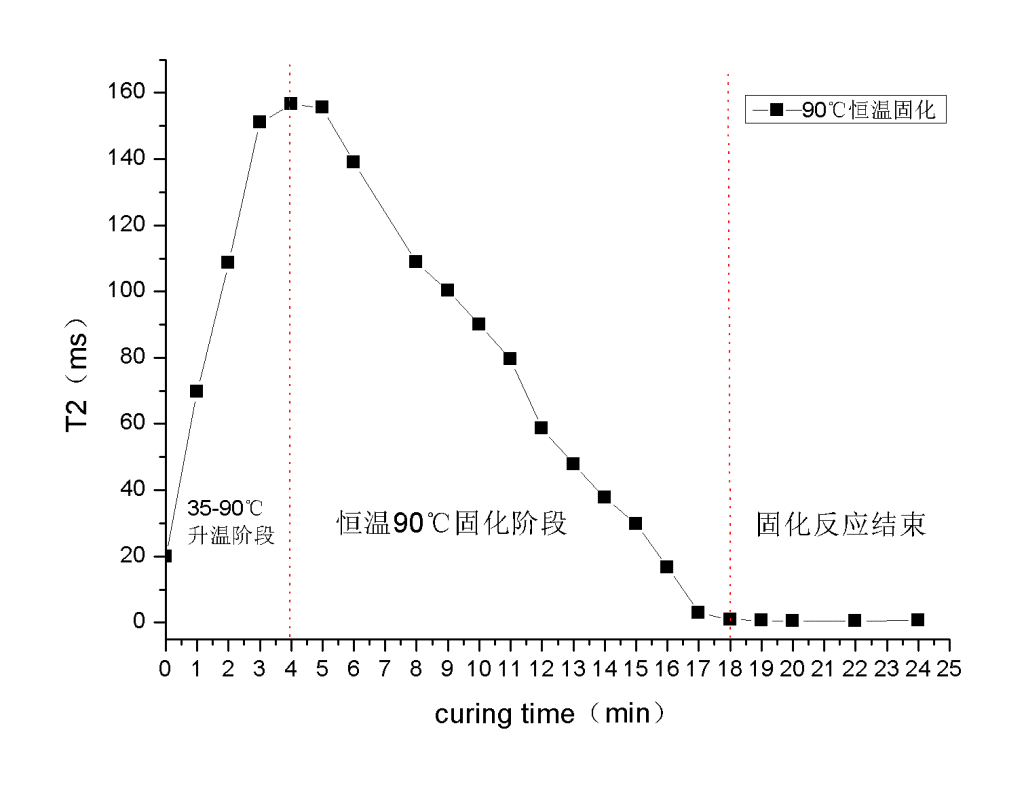
Curing process of thermal adhesive
Phase Change Materials (PCMs) are substances that absorb or release large amounts of latent heat during heating or cooling transitions. During phase change, the material maintains a constant temperature, unlike conventional materials which show sharp temperature shifts. This unique property makes PCMs highly valuable in energy-saving, thermal regulation, and thermal storage applications.
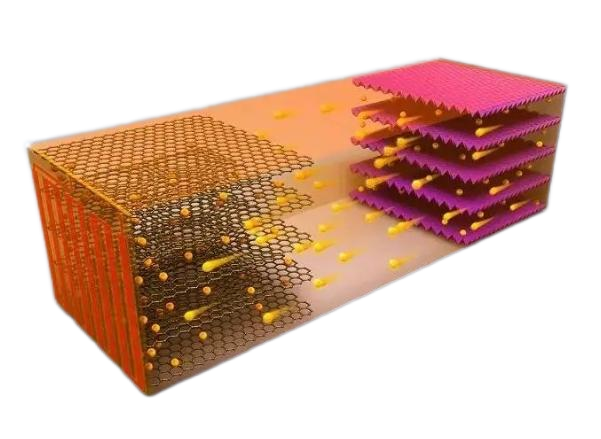
Key performance indicators for PCMs include:
1. Phase change temperature: The melting or crystallization point at which the material undergoes phase transition.
2. Thermal cycling stability: The ability of the PCM to maintain performance over repeated heating/cooling cycles.
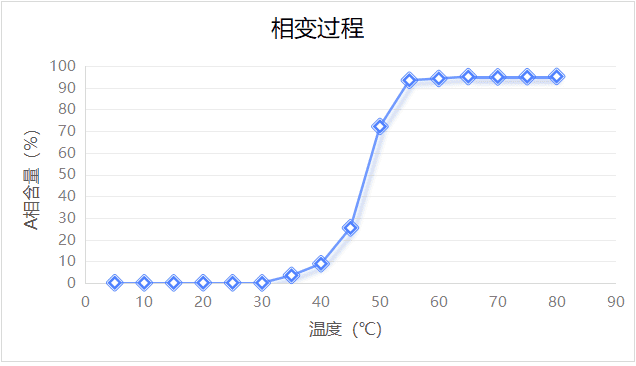
Low-field NMR, with its integrated sample temperature control capabilities, can simulate phase transitions at different temperatures—tracking liquid content and distribution in real time. This offers powerful insights into phase change behavior, transition points, and material stability.
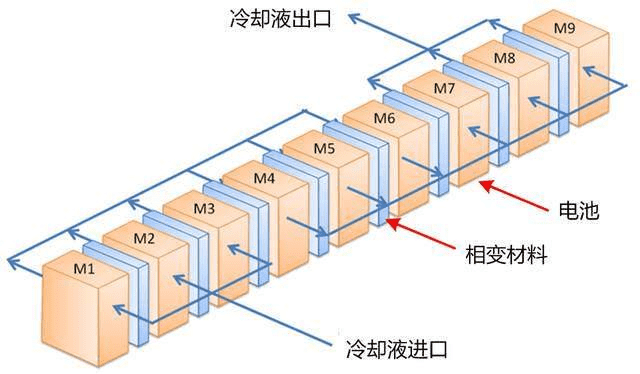
Note: The above content is for reference only. For more detailed data and technical specifications, please consult relevant scientific literature or contact a materials science expert.
 Scan QR Code
 Scan QR Code
 Phone Support
Phone: 400-060-3233
After-sales: 400-060-3233
 WeChat Support

 Official Account

Back to Top