


Using low-field nuclear magnetic resonance (LF-NMR) to elucidate the changes in water distribution and state during the drying process of wet porous fabrics. The fabric dries under different moisture regain conditions, and there are three distinct water components: bound water, capillary water, and free water. During drying, the amount of bound water slightly increases, while the content of free-moving water (including capillary and free water) decreases.
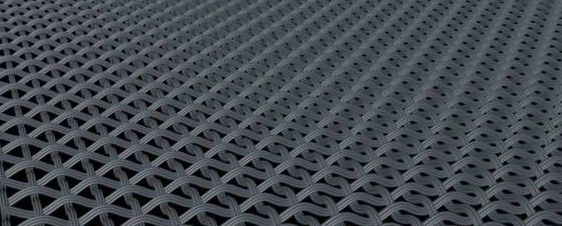
Porous thermal insulation fabrics easily absorb a significant amount of moisture under high humidity conditions. This moisture can have a complex impact on the insulation performance and latent heat, potentially playing an important role in thermal conduction resistance. Understanding the moisture status and distribution inside porous fabrics under high-temperature heat sources is crucial. The hygroscopic properties of flame-retardant fabrics also significantly affect the thermal protection performance of firefighter suits under high-temperature environments or flash fires. By dynamically monitoring the moisture flow and distribution within porous fabrics, it helps in the design and selection of suitable fire-resistant fabric materials to ensure fire safety performance.
Nuclear magnetic resonance (NMR) spectroscopy reveals information about molecular structures and dynamics, making it a fast, non-destructive analytical tool. Typically, the transverse relaxation time (T2) of NMR is used to study the mobility and distribution of water. The variation in T2 values reflects different states of water in the material, with higher T2 values indicating higher water mobility. In recent years, LF-NMR has been successfully applied to quantify changes in water distribution and mobility during food conversion and drying processes, or to elucidate water states and distributions in fibers or polymer materials.
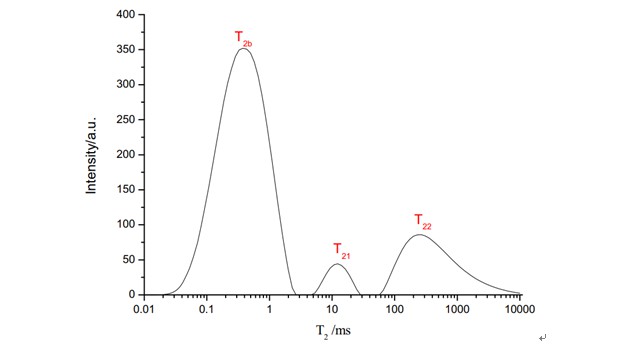
The purpose of this article is to use LF-NMR technology to determine the state of water and its role in the physical structure of fabric substrates under thermal radiation exposure. Understanding the interaction between fabric and water, evaluating the impact of moisture content, and the kinetics of moisture desorption (simulated drying) are key aspects of this research.
[[1] Zhu F L, Chen M, Feng Q Q. Water distribution within wetted porous fabric exposed to a thermal radiation characterized by low-field nuclear magnetic resonance [J]. Heat and Mass Transfer, 2019, 55(4):1239-1243.]
 Scan QR Code
 Scan QR Code
 Phone Support
Phone: 400-060-3233
After-sales: 400-060-3233
 WeChat Support

 Official Account

Back to Top