


Rice is one of the most important staple crops worldwide, with over 3 billion people relying on it as their primary food source. As arable land continues to decrease, increasing rice yield has become essential. Rice grain filling is a critical stage of development, involving the transport of photosynthetic products into the grains. It directly affects seed set, grain weight, yield, and rice quality.
The rice grain filling stage spans from the end of flowering when the hulls close until the grains fully mature. During this period, the fertilised ovule develops into the embryo, and the fertilised polar nuclei develop into endosperm. From a production perspective, this is the stage when the final yield is determined. It is crucial to maintain adequate photosynthetic area and ensure smooth transport of nutrients. The duration of grain filling is closely related to variety and temperature.
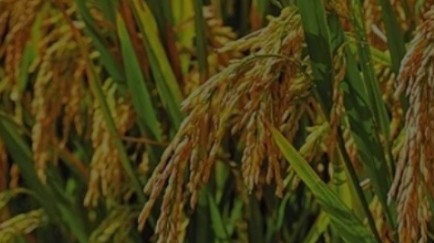
For early rice in southern regions, grain filling typically takes 10–15 days; for hybrid mid- to late-season indica rice, 25–35 days; and for japonica rice in northern regions, around 40 days. Local climate conditions may influence these durations, so actual filling times should be adjusted accordingly.
1. Water Management During Grain Filling
(1) In the early stage of filling, maintain a shallow water layer in the paddy; avoid deep flooding.
(2) During mid-stage filling, water frequently but sparingly, keeping the soil moderately moist.
(3) In the late stage of filling, reduce irrigation to maintain relatively dry soil, enhancing root activity and preventing lodging.
2. Temperature Management During Grain Filling
(1) Approximately 15 days before filling, optimal daytime temperature is around 29°C, nighttime around 19°C, with an average of 24°C.
(2) During filling, optimal growth temperature ranges between 20–28°C. In the 15 days after filling, daytime temperature should be around 20°C, nighttime around 16°C, with an average of 18°C.
(3) During filling, maximum temperature should not exceed 35°C, and minimum should not fall below 17°C.
Grain filling is a crucial process for final yield formation. The quality and rate of filling not only determine grain weight but also impact rice quality. Understanding the mechanisms of grain filling is therefore vital for increasing yield and improving quality, with water dynamics being a key factor. Soil moisture is an important environmental variable influencing rice grain filling.
Conventional methods rarely capture dynamic water changes in rice organs throughout the filling process. Traditional drying and weighing methods are simple but destructive, failing to accurately reflect real-time responses of living plants’ leaves and grains to soil moisture variations.
Low-field nuclear magnetic resonance (LF-NMR) offers a non-destructive, non-invasive approach to monitor water distribution and content in living plants. By combining proton density-weighted NMR imaging with NMR T2 relaxation spectrum analysis, we conducted continuous in vivo monitoring of rice, studying water dynamics during grain filling and exploring the impact of soil moisture on grain filling rate and final yield.
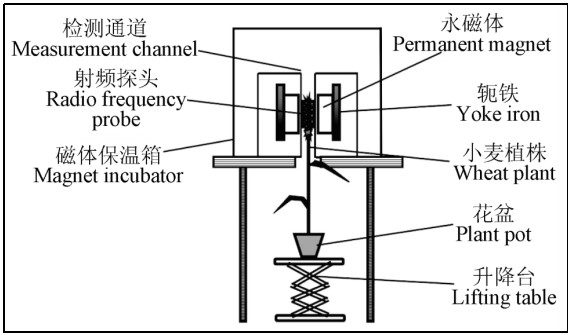
In Vivo Online NMR Monitoring System for Plants
(2) During mid-stage filling, water frequently but sparingly, keeping the soil moderately moist.
(3) In the late stage of filling, reduce irrigation to maintain relatively dry soil, enhancing root activity and preventing lodging.
2. Temperature Management During Grain Filling
(1) Approximately 15 days before filling, optimal daytime temperature is around 29°C, nighttime around 19°C, with an average of 24°C.
(2) During filling, optimal growth temperature ranges between 20–28°C. In the 15 days after filling, daytime temperature should be around 20°C, nighttime around 16°C, with an average of 18°C.
(3) During filling, maximum temperature should not exceed 35°C, and minimum should not fall below 17°C.
Grain filling is a crucial process for final yield formation. The quality and rate of filling not only determine grain weight but also impact rice quality. Understanding the mechanisms of grain filling is therefore vital for increasing yield and improving quality, with water dynamics being a key factor. Soil moisture is an important environmental variable influencing rice grain filling.
Conventional methods rarely capture dynamic water changes in rice organs throughout the filling process. Traditional drying and weighing methods are simple but destructive, failing to accurately reflect real-time responses of living plants’ leaves and grains to soil moisture variations.
Low-field nuclear magnetic resonance (LF-NMR) offers a non-destructive, non-invasive approach to monitor water distribution and content in living plants. By combining proton density-weighted NMR imaging with NMR T2 relaxation spectrum analysis, we conducted continuous in vivo monitoring of rice, studying water dynamics during grain filling and exploring the impact of soil moisture on grain filling rate and final yield.
In Vivo Online NMR Monitoring System for Plants
 Scan QR Code
 Scan QR Code
 Phone Support
Phone: 400-060-3233
After-sales: 400-060-3233
 WeChat Support

 Official Account

Back to Top