


Core analysis is an essential approach for understanding the geological characteristics of oil and gas reservoirs. As a porous medium, rock contains complex pore structures, where the behaviour of molecules, their motion, reaction processes, and the interactions among these phenomena are crucial subjects of core analysis research. In recent years, low-field nuclear magnetic resonance (NMR) core analysis has emerged as a fast and effective method to measure rock physical parameters. It is well-suited for both laboratory studies and on-site applications in oilfields, gaining wide recognition and increasingly broad application across the petroleum industry.
Fundamental Principle:
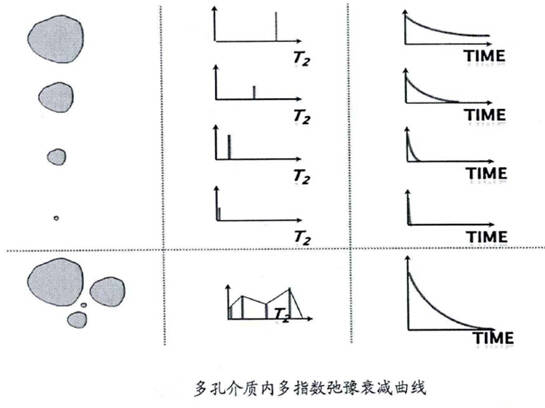
Low-field NMR technology exploits the characteristic of hydrogen nuclei in oil, gas, or water, which resonate in a magnetic field and generate detectable signals. This allows the detection of oil, gas, water, their distributions, and rock physical parameters. Within the rock, pores of varying sizes form the pore network, and the relaxation time reflects the characteristic size of these pores. Accordingly, the T2 spectrum illustrates the pore size distribution: larger pores correspond to longer relaxation times, shifting the T2 distribution curve to the right; smaller pores correspond to shorter relaxation times, positioning the curve to the left.
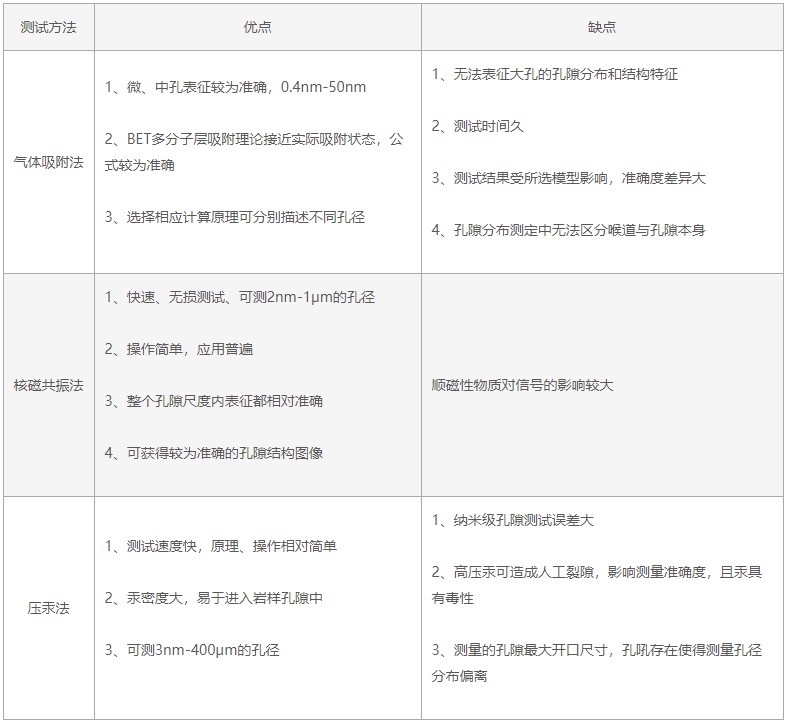
Comparison with Other Methods
Compared to gas adsorption, mercury intrusion, and gas porosity methods, low-field NMR offers multiple advantages: rapid measurements, non-destructive testing, and environmentally friendly procedures.
1. Determination of core porosity, permeability, and saturation
2. Measurement of oil and water saturation
3. Assessment of wettability
4. Core imaging
5. Analysis of oil and water content in drilling fluids
6. Study of freeze–thaw damage mechanisms in rocks
7. Investigation of triaxial compression damage and mechanical properties
8. High-temperature and high-pressure core displacement experiments
……
 Scan QR Code
 Scan QR Code
 Phone Support
Phone: 400-060-3233
After-sales: 400-060-3233
 WeChat Support

 Official Account

Back to Top