


Using low-field nuclear magnetic resonance (NMR) technology, experimental investigations were conducted to explore the effects of liquid nitrogen freezing time, freeze-thaw cycles, coal moisture content, and coal rank on the petrophysical transformation of freeze-thawed coal.
The four freeze-thaw variables exhibit distinct modification patterns on the pore structure, porosity, and permeability of coal.
Among them, the number of freeze-thaw cycles has the most significant impact on the coal’s petrophysical properties.
The effect of liquid nitrogen on the petrophysical properties of coal is influenced by the coal’s initial porosity. In general, the modification efficiency follows the order:
Lignite > Anthracite > Bituminous coal
The aim is to elucidate how freeze-thaw variables affect coal’s pore structure and permeability, providing data support for liquid nitrogen cyclic fracturing techniques in coal reservoirs.
Low-field NMR technology holds significant application potential and promotion value in geological and mining sectors, and is poised to become a routine and standardised tool in the field.
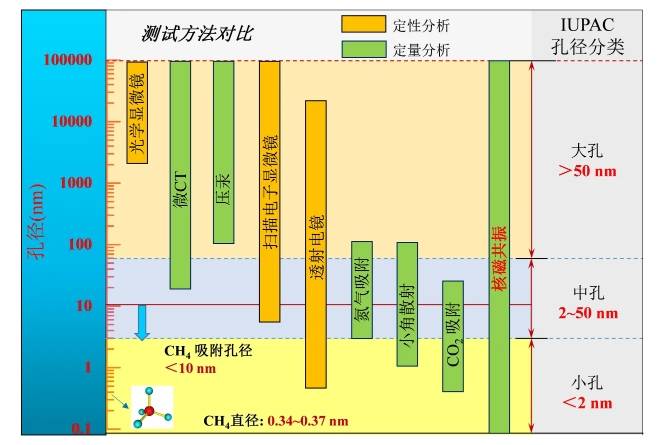
As previously noted, methane molecules typically measure 0.34–0.37 nm in diameter, and the majority of methane in coal is adsorbed within pores smaller than 10 nm. The NMR method described in Figure 1 offers a wide pore-size detection range, and NMR technology is both non-destructive and highly efficient. Therefore, NMR can precisely characterise methane adsorption and flow spaces within coal.
Case Studies
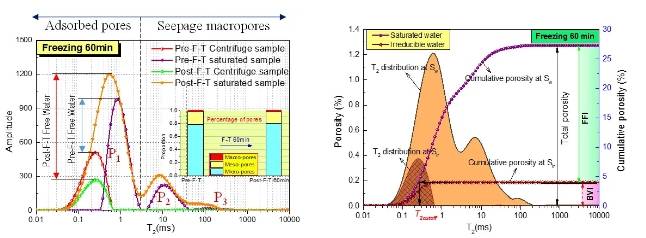
Figure 1 T2 spectrum and porosity measurement results of coal after 60 min liquid nitrogen freezing
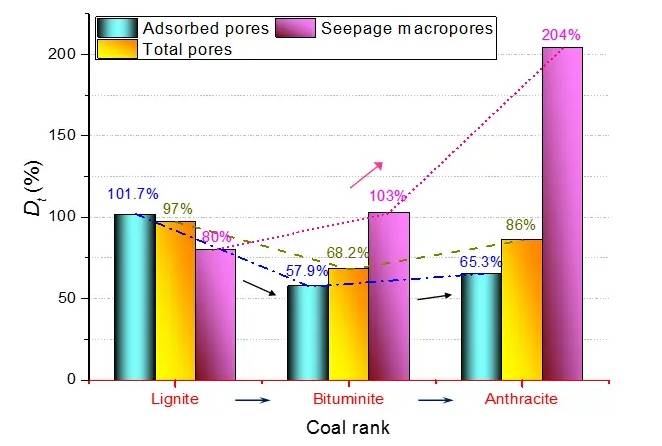
Figure 2 Comparison of liquid nitrogen freeze-thaw pore effects across different coal ranks
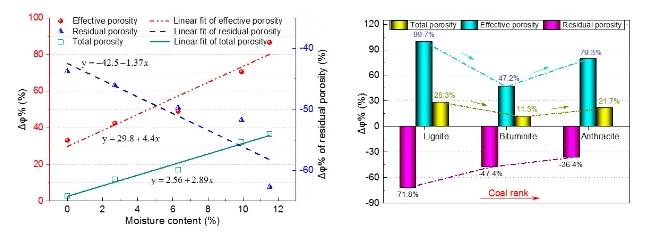
Figure 3 Effects of different freeze-thaw variables on coal porosity (effective and residual porosity)
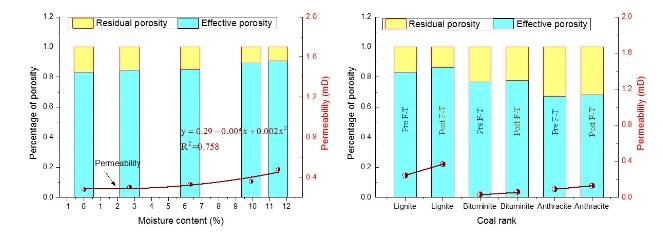
Figure 4 Effects of different freeze-thaw variables on porosity ratios and permeability
Conclusions:
It was observed that extending liquid nitrogen freezing time has limited impact on coal porosity and permeability; the effect diminishes with longer freezing durations.
The number of freeze-thaw cycles significantly affects pore structure, particularly the gas flow pores. Modifications to porosity and permeability increase with the number of cycles, greatly enhancing conditions for efficient gas extraction.
Higher coal moisture content improves permeability enhancement, although it is constrained by the coal’s saturation level.
The impact of coal rank on liquid nitrogen permeability enhancement also varies, mainly depending on initial porosity. In general, the effectiveness follows the order: lignite > anthracite > bituminous coal.
Source:
Lei Qin, Cheng Zhai, Shimin Liu, Jizhao Xu, Guoqing Yu, Yong Sun. Changes in the petrophysical properties of coal subjected to liquid nitrogen freeze-thaw—A nuclear magnetic resonance investigation. Fuel, 2017(194):102-114.
 Scan QR Code
 Scan QR Code
 Phone Support
Phone: 400-060-3233
After-sales: 400-060-3233
 WeChat Support

 Official Account

Back to Top