


Using low-field nuclear magnetic resonance (LF-NMR) technology, exploratory experiments were conducted to investigate how liquid nitrogen freezing duration, freeze-thaw cycles, coal moisture content, and coal rank affect the modification of freeze-thawed coal properties. The four freeze-thaw variables exhibit distinct effects on the pore structure, porosity, and permeability of freeze-thawed coal. Among them, the number of freeze-thaw cycles has the most pronounced impact on coal properties. The effect of liquid nitrogen on coals of different ranks depends on the initial porosity of the coal, with a general trend as follows: lignite > anthracite > bituminous coal. These experiments aim to reveal how freeze-thaw variables influence pore structure and permeability, providing critical data to support liquid nitrogen cyclic fracturing techniques for coal reservoirs. LF-NMR technology shows enormous potential and application value in the geological and mining sectors and is poised to become a standardised and routine tool in these fields.
Common Methods for Measuring Coal Pore Characteristics
The pore characteristics of coal include pore size, connectivity, and the distribution and proportion of pores. Methods for characterising coal pore size can be broadly divided into qualitative and quantitative approaches. Qualitative methods include optical microscopy, scanning electron microscopy (SEM), and transmission electron microscopy (TEM). Quantitative methods include mercury intrusion porosimetry (MIP), nitrogen adsorption, carbon dioxide adsorption, small-angle X-ray/neutron scattering (SAXS/SANS), and micro-CT. Each of these pore size measurement methods has limitations: low testing efficiency, restricted pore size range, and potential damage to the original pore structure. Figure 1 illustrates the applicable pore size ranges for various testing methods: MIP (100 nm–100 μm), nitrogen adsorption (2–100 nm), carbon dioxide adsorption (0.4–2 nm), SAXS/SANS (1–100 nm), and others.
The diameter of methane molecules generally ranges from 0.34–0.37 nm, and most methane molecules in coal are adsorbed within pores smaller than 10 nm. Among the methods listed in Figure 1, NMR offers the widest pore size measurement range and provides the additional advantages of non-destructive testing and high efficiency. Therefore, NMR is particularly suited to accurately characterise methane adsorption and flow spaces within coal. The experimental equipment and procedures are shown in Figure 2.
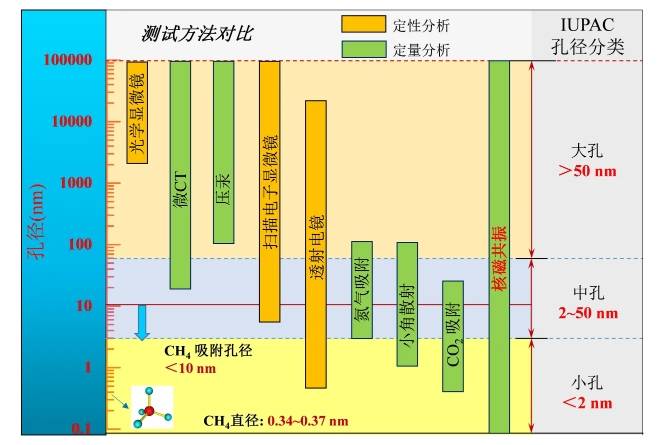
Figure 1 Comparison of applicable ranges for coal pore characterisation methods (nm)
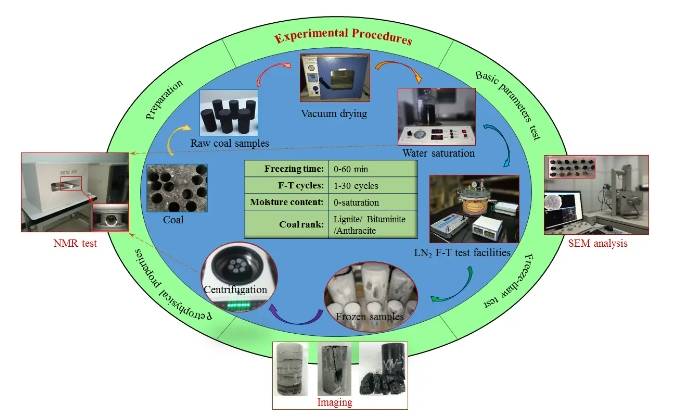
Figure 2 Experimental equipment and procedure workflow
 Scan QR Code
 Scan QR Code
 Phone Support
Phone: 400-060-3233
After-sales: 400-060-3233
 WeChat Support

 Official Account

Back to Top