

Professor Weimin Wei, Institute of Agro-Products Processing, Chinese Academy of Agricultural Sciences
Professor Weimin Wei, from the Institute of Agro-Products Processing of the Chinese Academy of Agricultural Sciences (CAAS), has formerly served as Vice President of Northwest A&F University and Director of the Institute. His research focuses on cereal chemistry and key technologies in wheat processing, plant protein extrusion and texturization, food origin traceability and verification, and safety control in food processing. He has led multiple national scientific and technological projects, including initiatives under the National Key R&D Program, the Modern Agriculture (Wheat) Industry Technology System, and the National Natural Science Foundation.
From developing food moisture analysis platforms to advancing intelligent material drying systems, Professor Wei has undertaken a series of impactful research projects. These not only addressed urgent industrial needs but also significantly accelerated the innovation and application of scientific instruments. A prime example is his collaboration with Suzhou Niumag Analytical Instrument Co., Ltd. (Niumag) and Hebei Jinshahe Flour Group Co., Ltd. Recently, he shared insights with Instrument.com.cn in an exclusive interview, discussing his academic journey and the stories behind the science.
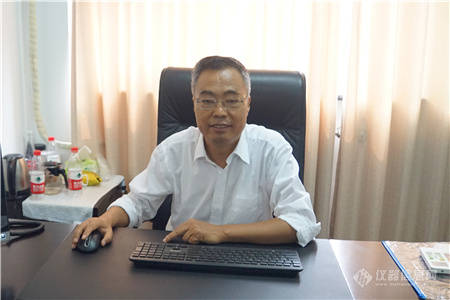
Professor Weimin Wei, Institute of Agro-Products Processing, CAAS
Water is the source of life. Globally, water research plays a vital role across disciplines, and for agricultural, forestry, and food raw materials, it is indispensable.
At the start of the interview, Professor Wei emphasized the centrality of moisture in the food sector. “Water is involved in every step from harvesting to safe storage, transport, processing, and food production. National standards require wheat to be stored safely at moisture levels below 12.5%, and flour at 14.5%. Seeds rely on moisture to germinate. Cooking methods like frying, baking, steaming, and boiling all depend on water. The freshness of fruits and vegetables is directly linked to water. In noodle production and drying, moisture control is absolutely critical.”
Professor Wei explained, “Moisture content not only affects taste, freshness, and texture, but also has commercial implications in food manufacturing — the amount of added water impacts both cost and profit.”
Current research topics in moisture include water content, state of water, migration behavior, and water activity. Traditional analysis often relies on oven-drying to constant weight, but this method may also remove volatile compounds alongside water, reducing accuracy.
“My work focuses on water-food interactions. Years of research have shown that NMR analysis and imaging are highly effective for studying moisture states and movement,” Professor Wei noted. “Based on hydrogen nucleus relaxation times, we can distinguish free water, weakly bound water, and strongly bound water. Imaging makes invisible moisture migration patterns visible.”
During earlier studies on high-moisture textured plant proteins, Professor Wei’s team experimented with low-field NMR instruments from Niumag. They discovered significant differences in water state and distribution between high and low-moisture foods. “That was when I realized LF-NMR could revolutionize our understanding of water in food,” he said. He later successfully integrated LF-NMR into the development of the food moisture analysis platform.
“The biggest value of NMR in food research is in distinguishing water states and visualizing moisture migration — enabling us to observe water behavior at the molecular level. That’s incredibly meaningful,” he added.
 Scan QR Code
 Scan QR Code
 Phone Support
Phone: 400-060-3233
After-sales: 400-060-3233
 WeChat Support

 Official Account

Back to Top